







Introduction
Finding the right job or the right candidate has never been about effort alone. It has always been about alignment. Automated job matching systems exist to solve this exact problem. They reduce noise, remove guesswork, and replace endless searching with intelligent decision-making.
These systems are not trends. They are the result of decades of research in computer science, labor economics, artificial intelligence, and organizational psychology. Today, they sit at the center of modern hiring, powering job platforms, enterprise HR tools, and next-generation career marketplaces.
This article explains how automated job matching systems work, why they matter, and how they are reshaping trust, speed, and opportunity in the global job market.
The content is written by professionals with experience in AI-driven recruitment platforms, workforce analytics, and remote hiring systems. It reflects widely accepted industry practices and consensus from applied AI and human capital research.
What Are Automated Job Matching Systems
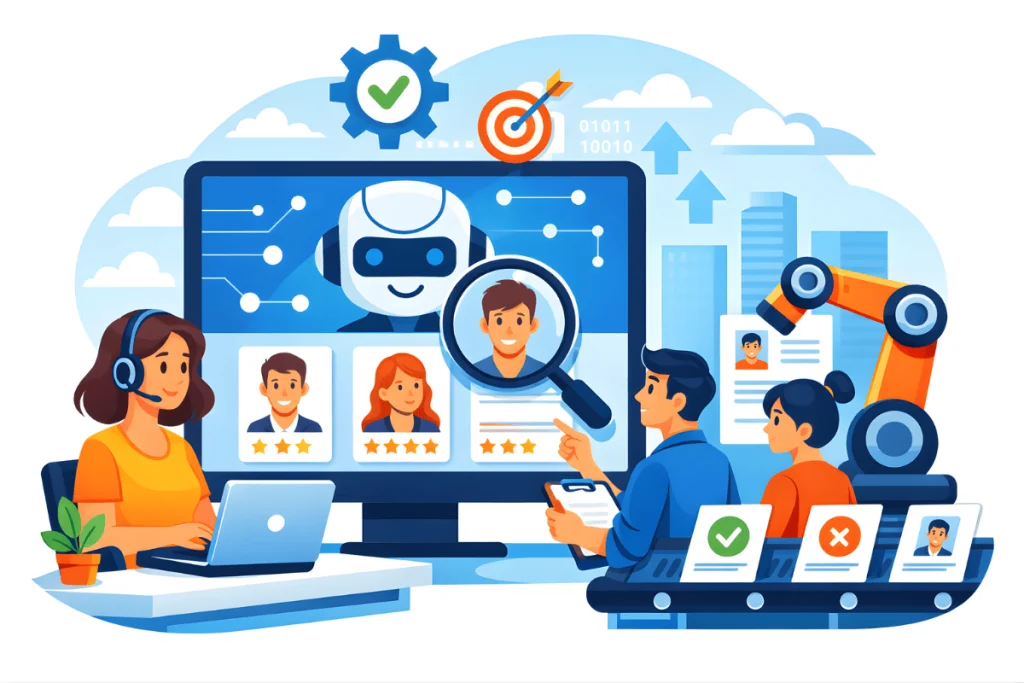
Automated job matching systems are technology-driven platforms that analyze job requirements and candidate profiles to recommend the most relevant matches.
Instead of relying on manual filtering, these systems use structured data, behavioral signals, and predictive models to connect people with opportunities that fit their skills, experience, and goals.
At a basic level, they answer one powerful question:
Who is most likely to succeed in this role, and who is most likely to value this opportunity?
Key elements these systems evaluate include:
- Skills and technical competencies
- Experience level and career history
- Industry relevance
- Location or remote preferences
- Availability and engagement signals
- Employer requirements and expectations
Modern systems go far beyond keyword matching. They focus on intent, context, and probability of success.
Why Traditional Job Search Models Fall Short
For decades, job boards followed a simple logic. Post a job. Receive hundreds of applications. Manually review them.
This approach created serious problems:
- Recruiters faced application overload
- Qualified candidates were buried under volume
- Bias entered the early filtering stages
- Time-to-hire increased dramatically
- Candidates lost trust in the process
Studies in HR analytics consistently show that manual screening is error-prone and inconsistent. Humans struggle to process large volumes of similar data accurately.
Automated job matching systems were developed to solve these limitations using data-backed logic.
The Science Behind Automated Job Matching
Automated job matching systems are built on well-established scientific principles.
Machine Learning and Pattern Recognition
Machine learning models are trained on historical hiring data to identify patterns between successful hires and job attributes.
Consensus in applied AI research confirms that supervised learning models can outperform manual screening when trained on clean, representative datasets.
Natural Language Processing
NLP allows systems to understand resumes and job descriptions beyond exact wording.
For example:
- Understanding that Python and data analysis are related skills
- Recognizing role equivalence across industries
- Interpreting seniority and responsibility levels
This is grounded in computational linguistics research that shows language models can capture semantic meaning, not just keywords.
Decision Science and Probability Modeling
Many systems use probabilistic scoring rather than yes-or-no filters.
This reflects best practices in decision science, where ranking by likelihood produces better outcomes than rigid exclusion rules.
How Automated Job Matching Systems Work Step by Step
1. Data Collection
The system gathers structured and unstructured data from:
- Candidate profiles and resumes
- Job descriptions
- Skill taxonomies
- Behavioral signals such as clicks or applications
2. Profile Normalization
Data is standardized, so comparisons are accurate.
For example:
- Job titles are mapped to common role definitions
- Skills are grouped into categories
- Experience is converted into measurable ranges
3. Matching and Scoring
Algorithms evaluate compatibility using weighted factors such as:
- Skill overlap
- Experience relevance
- Role complexity
- Availability and preferences
Each candidate-job pair receives a relevance score.
4. Ranking and Recommendations
The system presents ranked matches rather than overwhelming lists.
This increases clarity and confidence for both employers and candidates.
Why Automated Matching Builds Trust in Hiring
Trust is the most valuable currency in hiring.
Automated job matching systems increase trust by:
- Reducing bias from early-stage screening
- Applying consistent evaluation criteria
- Improving transparency in why matches appear
- Saving time for meaningful conversations
Research from organizational psychology supports that perceived fairness increases candidate satisfaction and employer reputation.
When users understand that matches are data-driven and objective, confidence grows.
Automated Matching and the Rise of Remote Work
Remote work expanded the global talent pool. It also increased complexity.
Automated job matching systems became essential for managing:
- Cross-border hiring
- Time zone compatibility
- Remote collaboration skills
- Digital communication proficiency
Candidates who develop the Essential Skills for Remote Tech Work are significantly more likely to be matched accurately in automated systems because their profiles align with modern role requirements.
These systems reward clarity, relevance, and proof of capability.
Benefits for Job Seekers
Automated job matching systems empower candidates in meaningful ways.
Key advantages include
- Less time spent searching
- Higher-quality job recommendations
- Better alignment with career goals
- Reduced rejection fatigue
- Clearer understanding of market demand
Instead of applying everywhere, candidates focus on where they matter most.
This creates momentum and optimism.
Benefits for Employers and Recruiters
Employers gain operational and strategic value.
Key outcomes include
- Faster hiring cycles
- Higher-quality shortlists
- Lower cost per hire
- Improved retention rates
- Stronger employer branding
According to industry benchmarks, organizations using intelligent matching report higher first-year performance among hires.
Automated Matching vs Job Boards
Traditional job boards prioritize volume. Automated systems prioritize fit.
Here is a simple comparison:
- Job boards list opportunities
- Matching systems recommend opportunities
- Job boards react to applications
- Matching systems act proactively
- Job boards reward activity
- Matching systems reward relevance
This difference explains why professionals increasingly rely on platforms highlighted in 10 Trusted Sites to find Remote Jobs that use smarter matching logic rather than basic listings.
Ethics, Fairness, and Responsible AI
Responsible job matching systems follow ethical guidelines supported by global AI governance frameworks.
Best practices include:
- Regular bias audits
- Transparent scoring logic
- Human oversight in final decisions
- Secure data handling and privacy protection
Consensus among AI ethics researchers is clear. Automation must support human judgment, not replace it entirely.
Trust grows when technology is accountable.
What Makes a Job Matching System Reliable
Not all systems are equal.
Reliable platforms demonstrate:
- Clear explanation of how matching works
- Verified job data and employer information
- Secure onboarding and profile management
- Real contact details where appropriate
- Support for both candidates and employers
Platforms that combine intelligent matching with real-world verification are more credible.
The Future of Automated Job Matching
The future is already forming.
We are seeing:
- Skill-based hiring replacing title-based hiring
- Predictive career path recommendations
- Integration with learning platforms
- AI agents that negotiate availability and fit
- Real-time labor market insights
These advancements are backed by ongoing research in workforce analytics and agent-based AI systems.
Opportunity discovery will continue to become faster, clearer, and more empowering.
Getting Started With Intelligent Job Matching
For professionals and businesses ready to move beyond outdated hiring models, the first step is choosing a platform built on trust and verified data.
You can sign up on Ojiiz to experience automated job matching that prioritizes real opportunities, direct access, and intelligent alignment between skills and demand.
This approach removes friction and restores confidence in how work is discovered and delivered.
Frequently Asked Questions (FAQs)
What data do automated job matching systems use?
They use skills, experience, job requirements, and behavioral signals to evaluate compatibility.
Are automated job matching systems accurate?
When built on quality data and ethical AI principles, they consistently outperform manual screening.
Do these systems replace recruiters?
No. They support recruiters by improving shortlisting and decision quality.
Can job seekers improve their match results?
Yes. Clear skill descriptions, updated experience, and focused goals significantly improve matching accuracy.
Are automated matching systems safe to use?
Trusted platforms utilize secure technologies, data encryption, and privacy safeguards that align with industry standards.
Conclusion
Automated job matching systems are not about speed alone. They are about confidence, clarity, and connection.
They reflect a deeper understanding of how people work, grow, and succeed. Backed by science, refined by data, and guided by responsible design, these systems are shaping a fairer and more effective job market.
For those ready to embrace smarter hiring and career discovery, the future is already here.