







Introduction
Finding freelance leads as a web developer is not just about sending more messages or joining more platforms. The real win comes from knowing where serious clients look, what problems they need solved, and how to present your skills as a clear business solution.
In 2026, companies are hiring web developers for landing pages, SaaS dashboards, ecommerce stores, website speed improvements, WordPress builds, Shopify development, API integrations, Webflow projects, React applications, and ongoing website support. That means opportunity is everywhere. But competition is also stronger.
The developers who win better freelance leads are not always the ones with the longest portfolio. They are the ones who communicate value clearly, respond fast, understand business goals, and build trust before asking for a sale.
This guide explains the best ways to find freelance leads for web developers, how to qualify them, and how to turn those leads into paid projects with confidence.
Who Created This Guide and Why It Matters
This article is written with insights from William, a lead generation expert with over a decade of experience building reliable, high-converting lead pipelines. His expertise in prospect research, data enrichment, lead verification, and strategic outreach helps shape this guide into a practical resource for web developers who want to find better freelance leads. The article focuses on proven ways to identify real opportunities, avoid low-quality prospects, and build a stronger client pipeline using clear, data-driven lead generation methods.
Why Freelance Lead Generation Has Changed in 2026
Freelance web development is no longer limited to small one-page websites. Businesses now need developers who can help them grow, automate, scale, and improve digital performance.
Remote work has also changed how companies hire. Many businesses now prefer flexible specialists for specific projects instead of hiring full-time employees for every technical need. Developers who understand this shift can position themselves for stronger opportunities.
If you want to understand how global companies are changing their hiring models, read this guide on Remote Hiring Trends 2026.
For web developers, this trend creates a powerful opening. A startup may need a landing page this month, a SaaS dashboard next month, and maintenance support after launch. A small business may need speed optimization, mobile fixes, or a booking system. An agency may need reliable development help for overflow projects.
The key is to stop thinking like “I need clients” and start thinking like “Which business problem can I solve fast and clearly?”
| Lead Source | Best For | Difficulty | Lead Quality |
| Ojiiz Web Development Leads | Active project discovery | Easy | High |
| B2B clients and founders | Medium | High | |
| Agencies | Recurring work | Medium | Very High |
| Referrals | Warm leads | Easy | Very High |
| Cold Outreach | Local and niche businesses | Medium | Medium-High |
| Freelance Marketplaces | Beginners and active projects | Medium | Medium |
1. Build a Clear Developer Positioning Before Looking for Leads
Before you search for freelance leads, define what kind of web development work you want to attract.
A broad profile like “freelance web developer” is easy to ignore. A focused profile gets attention faster because clients can instantly understand your value.
Examples of strong positioning:
- WordPress developer for service businesses
- Shopify developer for e-commerce brands
- Webflow developer for SaaS landing pages
- React developer for startup MVPs
- Website speed optimization expert
- Front-end developer for marketing agencies
Strong positioning helps clients trust you because it shows focus. It also helps search engines, freelance platforms, and AI discovery tools understand your expertise.
Your positioning should answer three questions:
- Who do you help?
- What problem do you solve?
- What result can the client expect?
For example, instead of saying, “I build websites,” say, “I help local service businesses launch fast, mobile-friendly websites that turn visitors into leads.”
That small shift makes your service easier to buy.
2. Use Freelance Lead Platforms with Buyer Intent
Freelance platforms are still one of the best ways to find web development leads because clients already have a project in mind. The challenge is not finding listings. The challenge is choosing the right ones.
Look for leads with signs of real buyer intent:
- Clear project scope
- Specific technology requirements
- Realistic budget
- Business goal mentioned
- Timeline included
- Past hiring activity
- Fast response history
Avoid leads that only say “need website” with no details, no budget, and no clear goal. Some of these can still convert, but they often require more education and filtering.
For developers who want to compare multiple lead sources, this guide on the Best Sites to find Freelance Clients can help you choose the right channel based on your skill level and project goals.
The best approach is to use platforms for discovery, but compete with strategy. Do not send generic proposals. Mention the client’s problem, suggest a simple first step, and show proof that you understand the work.
3. Explore Web Development Leads on Ojiiz
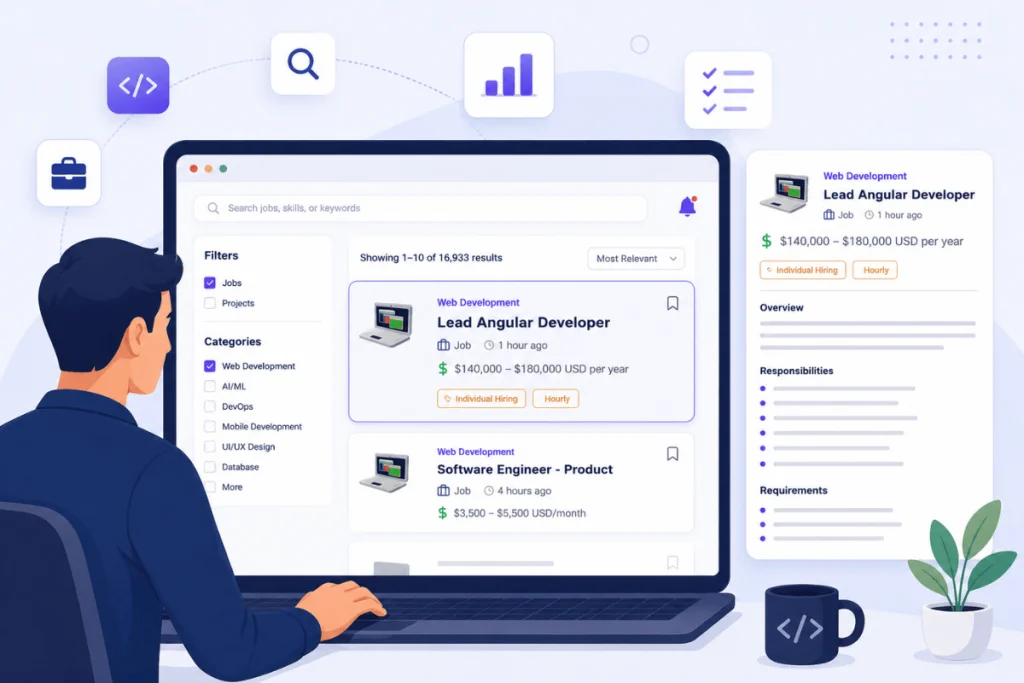
One of the fastest ways to find freelance leads is to look where businesses are already posting developer opportunities. Ojiiz gives web developers a focused place to discover project-based and role-based leads across front-end, full-stack, Angular, and other web development categories.
Instead of searching across random job boards, developers can explore Web Development Leads on Ojiiz and review opportunities that match their skills, project goals, and availability.
For example, web developers may find opportunities such as a Lead Angular Developer job, listed at the time of writing with a $140k–$180k USD range. Front-end developers can also review roles like this Front-End Developer, listed at $80k–$120k USD. Developers with broader technical experience may also explore a Full-Stack Developer, listed at $120k–$150k USD.
These examples show why focused lead platforms can be valuable. A web developer can quickly understand the role type, skill demand, and earning potential before deciding whether to apply or reach out.
To get better results from Ojiiz or any lead platform, prepare these assets before contacting a prospect:
- A short developer introduction
- Two or three relevant portfolio examples
- A clear explanation of your process
- Your preferred tech stack
- A simple project or an hourly rate range
- A fast response message for new leads
Freelance leads move quickly. Developers who respond with clarity, proof, and confidence often get the first serious conversation.
4. Use LinkedIn for B2B Freelance Leads
LinkedIn is one of the strongest lead generation channels for web developers because many business owners, founders, marketers, recruiters, and agency owners are active there.
But LinkedIn works best when you use it as a trust-building channel, not just a cold messaging tool.
Start by improving your profile. Your headline should explain your value, not only your job title. Your featured section should show projects, results, testimonials, or case studies. Your about section should explain who you help and how.
Then build a simple weekly routine:
- Connect with founders, agency owners, and marketing managers
- Comment on posts from your target clients
- Share short posts about website problems and fixes
- Publish mini case studies
- Send helpful messages, not pushy pitches
For a deeper LinkedIn strategy, read this guide on Freelancers using LinkedIn for lead generation.
A good LinkedIn message should be short and relevant. For example:
“Hi Sarah, I noticed your company is growing its e-commerce store. I help Shopify brands improve site speed and checkout flow. Happy to share a few quick improvement ideas if useful.”
This sounds helpful, not desperate.
5. Turn Project-Based Work into a Lead Source
Many web developers only search for full projects, but project-based roles can be a powerful source of recurring freelance income.
A project-based role may start with one landing page, one dashboard, or one website fix. If you deliver well, it can turn into ongoing maintenance, new features, referrals, and long-term support.
This is especially useful for developers who want flexibility without constantly chasing new clients. You can learn more about project-based roles for developers and how they support career growth.
Examples of project-based freelance services include:
- Website redesign
- Landing page development
- Speed optimization
- WordPress maintenance
- Shopify store updates
- SaaS front-end improvements
- API integration
- Payment gateway setup
- Bug fixing
- Conversion-focused page updates
The best project-based offers are specific. Instead of saying “I offer web development,” create a clear offer like “I fix slow WordPress websites in 7 days” or “I build high-converting landing pages for SaaS startups.”
Specific offers are easier for clients to understand and easier for you to sell.
6. Build a Portfolio That Sells Outcomes, Not Just Designs
A portfolio should do more than show screenshots. It should prove that you can solve business problems.
For each project, include:
- Client type
- Problem
- Your solution
- Tools or technologies used
- Result or improvement
- Short testimonial, if available
For example:
Built a responsive website for a local cleaning company. The old site loaded slowly and had no clear contact path. I rebuilt the homepage, improved mobile layout, added service pages, and created a stronger quote request flow.”
Even if you do not have big results yet, explain the thinking behind your work. Clients want to know that you understand goals, users, and business impact.
If you are new, create demo projects for real niches. Build a landing page for a dentist, a booking website for a salon, or a Shopify-style product page for a small brand. Make the project look practical and client-ready.
7. Use Cold Outreach with Research and Respect
Cold outreach still works when it is personal, useful, and focused. It fails when it sounds copied.
Web developers can use cold outreach for local businesses, SaaS startups, ecommerce brands, marketing agencies, coaches, consultants, and service companies.
Look for businesses with visible website problems:
- Slow loading pages
- Poor mobile design
- Broken forms
- Outdated design
- Weak call-to-action
- Missing service pages
- Confusing navigation
- Poor checkout experience
Then write a short message that points out one issue and offers one helpful next step.
Example:
“Hi Alex, I noticed your booking page takes a few extra seconds to load on mobile. That can hurt inquiries, especially from paid traffic. I help service businesses improve website speed and lead forms. Would you like me to send 3 quick improvement ideas?”
This kind of message works because it is specific, respectful, and focused on the client’s result.
8. Partner with Agencies That Need Development Support
Small marketing agencies, SEO agencies, branding studios, and paid ads agencies often need freelance web developers.
They may have clients who need landing pages, technical fixes, WordPress updates, tracking setup, or design-to-development work. Many agencies do not want to hire a full-time developer, so a reliable freelancer becomes valuable.
Start by creating a short agency outreach list. Look for agencies that offer design, branding, ads, or SEO but do not clearly show a large in-house development team.
Your message can be simple:
“Hi, I help agencies with reliable white-label web development support, including WordPress, landing pages, and technical fixes. If you ever need extra development capacity, I’d be happy to share a few relevant examples.”
Agency partnerships can become one of the most stable lead sources because one agency can send multiple projects over time.
9. Ask Past Clients for Referrals the Right Way
Referrals are powerful because trust is already partly built. But asking for referrals should feel natural, not forced.
The best time to ask is after a successful project, a positive review, or a clear client win.
Example:
“I’m glad the new site is working well for you. If you know another business owner who needs help with their website, I’d be grateful for an introduction.”
You can also make referrals easier by explaining who you are looking for:
“I’m currently helping service businesses improve their websites, speed, and lead forms. Anyone in that space would be a great fit.”
This helps clients think of the right person faster.
10. Create Helpful Content That Attracts Clients
Content can attract freelance leads when it answers real client problems.
You do not need to post every day. You need to post useful insights consistently.
Good content ideas for web developers:
- “5 signs your website is losing leads”
- “Why is your WordPress site slow”
- “What to prepare before hiring a web developer”
- “How better landing pages improve ad results”
- “Website mistakes small businesses should fix”
This content works because it speaks to client pain points, not only developer topics.
Avoid writing only about code if your target client is non-technical. A founder may not search for “React hydration error,” but they may care about “why my website is not converting visitors.”
11. Use Niches to Find Better Leads Faster
A niche makes lead generation easier because you know who to contact, what problems they have, and what offer to present.
Strong niches for freelance web developers include:
- SaaS startups
- E-commerce brands
- Local service businesses
- Real estate professionals
- Healthcare clinics
- Coaches and consultants
- Marketing agencies
- Online course creators
- Restaurants and hospitality brands
Choose a niche based on demand, your skills, and project value. E-commerce brands may need Shopify development. SaaS startups may need landing pages and dashboards. Local businesses may need websites, booking forms, and speed fixes.
A niche does not limit you forever. It gives your marketing a sharper focus.
12. Qualify Leads Before You Spend Too Much Time
Not every lead deserves a long call. Good freelancers protect their time by qualifying prospects early.
Ask simple questions:
- What is the main goal of the project?
- What problem are you trying to solve?
- Do you have a deadline?
- Do you already have content, design, or branding?
- What platform or technology do you prefer?
- Have you set a budget range?
- Who will approve the project?
A qualified lead has a real need, budget, decision-maker access, and urgency. If a prospect has no goal, no budget, and no timeline, they may not be ready.
Qualifying leads helps you stay focused on opportunities that can actually become paid work.
13. Create a Simple Weekly Lead System
The best freelance developers do not depend on luck. They build a repeatable lead system.
Here is a simple weekly plan:
- Apply to 10 relevant freelance leads
- Send 10 LinkedIn connection requests
- Message 5 agencies
- Follow up with 5 old prospects
- Publish 1 helpful post
- Ask 1 past client for a referral
This system is small enough to maintain and strong enough to create momentum. The goal is not to do everything at once. The goal is to stay visible, useful, and consistent.
Common Mistakes Web Developers Should Avoid
Many developers lose leads because of simple mistakes that can be fixed quickly.
- Sending generic proposals: Clients can tell when a message is copied. Mention their project details.
- Talking only about tools: Clients care about outcomes. Explain how your skills help their business.
- Ignoring follow-ups: Many deals happen after the second or third message.
- Having no clear offer: Make it easy for clients to understand what you do.
- Pricing too low forever: Low pricing can attract low-quality leads and reduce trust.
- Not showing proof: Case studies, screenshots, testimonials, and results increase confidence.
A strong freelance business is built on trust, clarity, and consistent action.
Expert Tips to Win Better Freelance Web Development Leads
Here are a few practical tips that can improve your lead quality:
- Lead with the client’s goal: Talk about revenue, leads, speed, user experience, or reduced manual work.
- Create service packages: A fixed website audit, landing page build, or monthly support plan is easier to buy.
- Respond quickly: Fast, thoughtful replies show professionalism.
- Keep proposals short: Clients are busy. Clear beats long.
- Use proof early: Add one relevant example instead of sending your full portfolio.
- Follow up politely: A simple follow-up can revive a serious lead.
The best developers make hiring feel safe. They explain the next step, reduce confusion, and show that they can deliver.
Conclusion
Finding freelance leads for web developers is easier when you stop chasing everyone and start targeting the right clients with the right offer.
Use freelance platforms for buyer-ready opportunities. Use LinkedIn to build trust. Use Ojiiz to explore focused web development leads. Build agency partnerships, ask for referrals, publish helpful content, and qualify every lead before investing too much time.
The future is bright for developers who combine technical skill with clear communication. Clients do not just want code. They want faster websites, better customer experiences, more leads, stronger systems, and reliable experts who make projects feel easier.
If you can position yourself as that expert, freelance web development can become a powerful, flexible, and rewarding career path.
FAQs
What is the best way to find freelance leads as a web developer?
The best way is to combine multiple channels: freelance platforms, LinkedIn, agency partnerships, referrals, and direct outreach. A focused offer and strong portfolio will help you convert more leads into paid projects.
How can beginner web developers get their first freelance leads?
Beginners should start with demo projects, small business outreach, LinkedIn networking, and freelance platforms. The goal is to build proof, collect testimonials, and improve proposal quality.
Are freelance platforms still good for web developers in 2026?
Yes, freelance platforms are still useful because many clients already have active projects and budgets. Developers should focus on relevant listings, strong proposals, and clear positioning to avoid competing only on price.
How do I get high-quality web development clients?
High-quality clients usually come from strong positioning, referrals, LinkedIn authority, agency partnerships, and clear case studies. Show business outcomes, not just technical skills.
How often should I follow up with freelance leads?
A good follow-up schedule is after 2–3 days, then again after one week. Keep it polite and useful. Share a quick idea, answer a possible concern, or remind them of the next step.
What skills help web developers attract more freelance leads?
In-demand skills include WordPress, Shopify, Webflow, React, JavaScript, website speed optimization, landing page development, API integrations, responsive design, and conversion-focused development.
How can I make my freelance proposal stand out?
Mention the client’s exact problem, explain your approach briefly, show one relevant example, and end with a clear next step. Avoid long generic proposals.
Can web developers get recurring freelance work?
Yes. Recurring work often comes from maintenance, website updates, speed monitoring, landing page testing, ecommerce support, and agency partnerships.