




Our Blogs

Expert insights on remote work, client acquisition, and project success discover strategies that help you grow smarter and faster with Ojiiz.
What Is B2B Lead Generation

What Is B2B Lead Generation? Process, Strateg...

B2B lead generation is the structured process of identifying, attracting, and qualifying businesses that have a genuine likelihood of purchasing a product or service. Unlike B2C marketing, which often targets individuals driven by impulse or emotion, B2B lead generation focuses on logic, value, return on investment, and long-term outcomes.

At its core, B2B lead generation connects a company’s expertise with organizations actively seeking solutions. Industry consensus in marketing science and sales research consistently shows that organizations with a defined lead generation system achieve higher pipeline predictability, shorter sales cycles, and stronger customer lifetime value.

Why B2B Lead Generation Matters More Than Ever

Modern B2B buyers are informed, analytical, and cautious. Research widely cited across marketing literature shows that most buyers complete a significant portion of their evaluation before speaking to sales.

This shift has made lead generation a strategic growth function rather than a marketing afterthought.

Key reasons it matters:

  • It builds qualified demand, not just traffic
  • It aligns marketing and sales around shared revenue goals
  • It reduces acquisition costs over time
  • It creates visibility into future revenue

Organizations that invest early in lead generation infrastructure consistently outperform competitors that rely on referrals alone.

How B2B Lead Generation Works: The Core Process
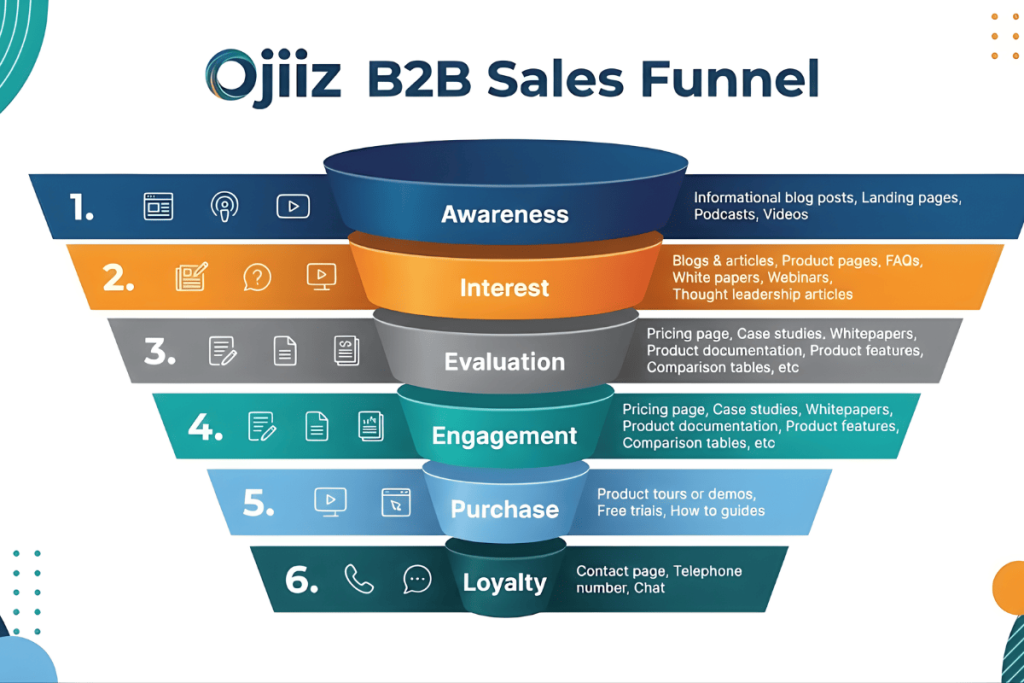
B2B lead generation follows a repeatable framework grounded in buyer behavior research.

1. Identifying the Ideal Customer Profile (ICP)

An ICP defines the type of business most likely to benefit from your solution. This includes:

  • Industry
  • Company size
  • Revenue range
  • Decision-maker roles
  • Pain points

This step ensures effort is focused on high-value opportunities.

2. Attracting Relevant Prospects

Attraction happens through educational and value-driven channels, such as:

  • Search-optimized content
  • Professional networks like LinkedIn
  • Industry webinars
  • Email campaigns
  • Paid media with intent targeting

The goal is not volume, but relevance.

3. Capturing Lead Information

Once interest is established, prospects exchange their contact details for value:

  • Whitepapers
  • Demos
  • Case studies
  • Consultations

This value-exchange model is a well-established principle in digital marketing psychology.

4. Qualifying Leads

Qualification separates curiosity from intent. Common criteria include:

  • Budget authority
  • Decision timeline
  • Business need
  • Fit with the solution scope

Sales and marketing alignment at this stage is critical.

Types of B2B Leads You Should Understand

Not all leads are equal. Effective teams categorize leads to improve conversion efficiency.

  • Marketing Qualified Leads (MQLs): Engaged prospects showing early interest
  • Sales Qualified Leads (SQLs): Prospects vetted and ready for sales engagement
  • Product Qualified Leads (PQLs): Users who experience product value firsthand
  • Cold Leads: Contacts that require nurturing and education

Clear definitions reduce friction between teams and improve forecasting accuracy.

Proven B2B Lead Generation Strategies That Work
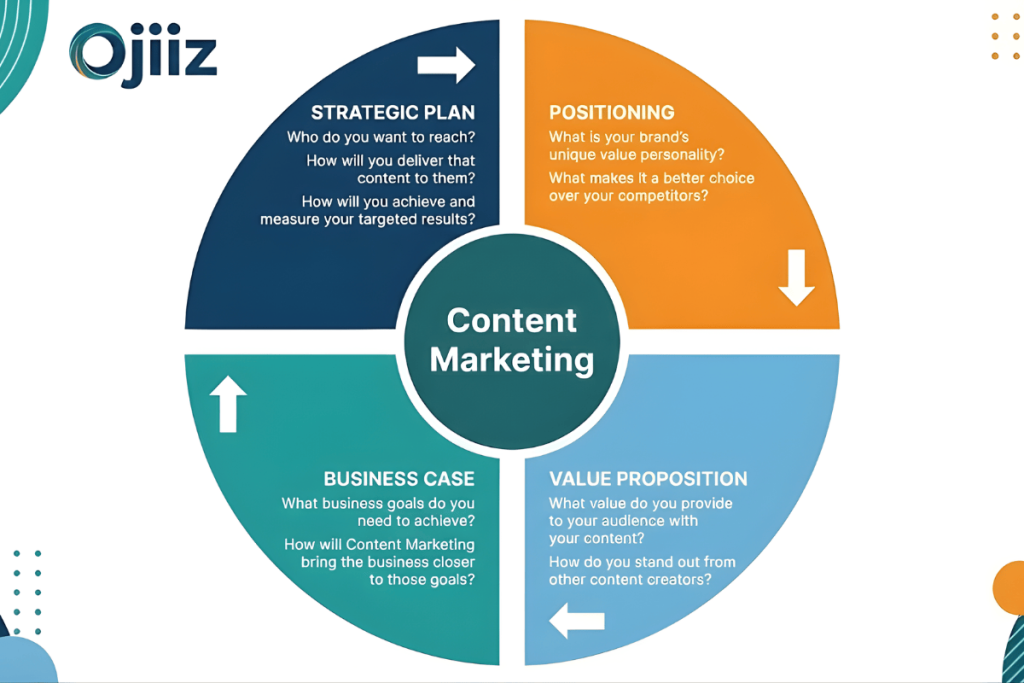
Content-Driven Lead Generation

Educational content remains one of the most trusted acquisition methods. Search engines reward depth, accuracy, and relevance, while buyers reward clarity.

Strategic content includes:

  • Industry guides
  • Research-backed blogs
  • Decision frameworks
  • Comparison resources

AI-assisted tools are now widely used to scale this effort responsibly. A practical overview of this approach is explained in AI Platforms Usage for Effective Lead Generation, which highlights how automation supports, not replaces, human judgment.

Lead Generation Platforms

Technology plays a central role in organizing, scoring, and nurturing leads at scale. A clear explanation of this ecosystem is covered in What is a Lead Generation Platform, detailing how data, workflows, and analytics connect marketing to revenue outcomes.

Consensus among revenue operations experts shows that centralized platforms reduce leakage and improve response time.

Choosing the Right Tools

Not every platform fits every business. Factors such as team size, sales cycle length, and deal value matter. A comparative outlook on emerging solutions is discussed in Best Platforms for Lead Generation, helping decision-makers evaluate tools based on real-world use cases.

Account-Based Marketing (ABM)

ABM focuses on high-value accounts rather than broad audiences. It combines personalization, data intelligence, and coordinated outreach.

Benefits include:

  • Higher deal sizes
  • Stronger relationships
  • Shorter sales cycles for enterprise deals

Email and Relationship-Led Outreach

Email remains effective when it is:

  • Relevant
  • Respectful
  • Timely

Trust is built through consistency and insight, not frequency.

The Role of Data, AI, and Analytics in B2B Lead Generation

Industry research consistently supports the use of data-driven decision-making. Analytics helps teams:

  • Identify high-intent behavior
  • Optimize conversion paths
  • Forecast revenue accurately

AI enhances pattern recognition and prioritization, while human teams retain control over strategy and messaging. This hybrid model reflects current best practices across leading B2B organizations.

Common B2B Lead Generation Mistakes to Avoid

Even strong teams can underperform if fundamentals are ignored.

Avoid:

  • Chasing volume over quality
  • Ignoring sales feedback
  • Over-automating early relationships
  • Measuring activity instead of outcomes

Trust grows when prospects feel understood, not processed.

How to Measure B2B Lead Generation Success

Effective measurement focuses on business impact, not surface metrics.

Key indicators include:

  • Lead-to-opportunity conversion rate
  • Cost per qualified lead
  • Sales cycle length
  • Customer acquisition cost
  • Lifetime value

These metrics are widely recognized across revenue operations frameworks.

Frequently Asked Questions (FAQs)

What is the main goal of B2B lead generation?

The primary goal is to build a predictable pipeline of qualified business prospects who are likely to convert into long-term customers.

How is B2B lead generation different from B2C?

B2B focuses on longer decision cycles, multiple stakeholders, and value justification, while B2C often centers on individual purchasing behavior.

How long does B2B lead generation take to show results?

Timelines vary, but most organizations see meaningful momentum within three to six months of consistent execution.

Is content marketing essential for B2B lead generation?

Yes. Educational content builds credibility, supports buyer research, and attracts high-intent prospects organically.

Can small businesses succeed with B2B lead generation?

Absolutely. Clear positioning, focused targeting, and disciplined execution allow small teams to compete effectively.

Conclusion

B2B lead generation is not about persuasion alone. It is about clarity, credibility, and consistency. Organizations that prioritize education, data integrity, and buyer intent create pipelines that last beyond short-term campaigns.

When done correctly, lead generation becomes a growth engine rooted in trust, one that compounds value over time and strengthens every customer relationship that follows.


Tech Jobs

10 Future-Proof Remote Tech Jobs with Excepti...

The dream of a high-impact, location-independent career in technology is not just a fantasy;  it’s today’s reality. Companies worldwide are aggressively competing for elite tech professionals, offering exceptional compensation for the skills that power our digital world. This shift represents more than a trend; it’s a fundamental restructuring of the workforce that rewards expertise, autonomy, and results. For the skilled technologist, this is a moment of unprecedented opportunity. By aligning your capabilities with the most in-demand roles, you can unlock a career defined by freedom, financial reward, and profound professional satisfaction. The journey begins with understanding where the greatest opportunities lie.

The Remote Revolution: Why Tech Leads the Way

The technology sector has fundamentally embraced remote work, transitioning from a temporary solution to a core strategic advantage. This paradigm shift is driven by a global hunt for specialized talent and overwhelming data showing that remote tech teams often achieve higher productivity and innovation. Companies are no longer limited by geography; they can hire the best machine learning engineer from Toronto, a brilliant DevOps specialist from Lisbon, and a top-tier cybersecurity expert from Singapore. This global talent pool means that compensation is becoming standardized at the highest level. For you, this translates into the power to choose work that aligns with your passions, from anywhere with a reliable internet connection, while being paid a premium for your expertise. Success in this environment requires a specific set of skills; developing these Essential Skills for Remote Tech Work is the critical first step toward securing these coveted roles.

The Top 10 Highest-Paying Remote Tech Roles

Job CategoryKey OpportunitiesWhy It’s High-Paying & Remote-Friendly
AI/ML EngineeringDesign, build, & deploy intelligent systems.Extreme specialization & business-critical impact drive top-tier salaries. Work is inherently digital & collaborative via cloud platforms.
DevOps & Site Reliability Engineering (SRE)Bridge development & operations; ensure system resilience.Directly responsible for the uptime & revenue of digital products. Monitoring & automation tools are built for remote management.
Cloud Architecture & EngineeringDesign, implement, & manage cloud infrastructure.Central to modern business infrastructure. Cloud consoles & infrastructure-as-code enable complete remote control.
Cybersecurity (SecOps & Threat Analysis)Protect systems, data, & networks from digital attacks.High-stakes role protecting critical assets. Threat monitoring & incident response are 24/7 global activities.
Data Science & EngineeringExtract insights & build pipelines from vast datasets.Decisions driven by data command high value. Work with cloud-based data platforms and distributed teams.
Blockchain DevelopmentDevelop decentralized applications & smart contracts.Niche expertise in a rapidly growing, high-value field. Projects are global and digital by nature.
Full-Stack & Web DevelopmentBuild and maintain user-facing applications & services.Continual demand for digital experiences. Modern dev tools & Agile workflows are designed for distributed teams.
Technical Product ManagementGuide the strategy & execution of tech products.Combines deep technical knowledge with business strategy. Aligns distributed engineering, design, and marketing teams.
Sales Engineering (Tech)Provide technical expertise throughout the sales process.Directly enables high-value revenue generation. Demos, architectures, and consulting are effectively delivered remotely.
AR/VR DevelopmentCreate immersive virtual & augmented reality experiences.Pioneering field with high demand for specialized skills. Development and collaboration happen in digital creation environments.

Here are the roles where expertise meets exceptional reward in the remote landscape.

1. AI/ML Engineer

  • Salary Range: $180,000 – $300,000+
  • Primary Skills: Machine Learning (TensorFlow, PyTorch), Deep Learning, Natural Language Processing (NLP), Python, MLOps, Cloud AI services (AWS SageMaker, GCP Vertex AI).
  • The Remote Advantage: The work of building, training, and deploying models is almost exclusively performed on cloud-based infrastructure. Collaboration happens through code repositories, experiment tracking tools, and video calls, making physical presence unnecessary. The intense global competition for this scarce talent pushes salaries to the top of the scale.
  • Find Opportunities: Explore current openings in our AI/ML Job Category.

2. DevOps & Site Reliability Engineer (SRE)

  • Salary Range: $160,000 – $250,000+
  • Primary Skills: Kubernetes, Docker, CI/CD (Jenkins, GitLab), Infrastructure as Code (Terraform, Ansible), cloud platforms (AWS, Azure, GCP), scripting (Python, Go).
  • The Remote Advantage: SREs are the guardians of digital uptime. Their tools, monitoring dashboards, alerting systems, and cloud consoles are accessible from anywhere. The role often requires being on-call, which is naturally suited to a remote environment. Their direct impact on product stability and user experience makes them invaluable.
  • Find Opportunities: Browse active roles in our DevOps/Database category.

3. Cloud Architect

  • Salary Range: $170,000 – $240,000+
  • Primary Skills: Expert-level certification in AWS, Azure, or GCP; network architecture; security; cost optimization; solution design.
  • The Remote Advantage: Architects design systems that are inherently remote-first, global, scalable, and secure cloud infrastructures. They consult with teams and stakeholders virtually to design solutions that can be implemented and managed from anywhere in the world.

4. Cybersecurity Specialist (SecOps/Threat Intelligence)

  • Salary Range: $150,000 – $220,000+
  • Primary Skills: Security Information and Event Management (SIEM), incident response, threat hunting, penetration testing, compliance frameworks (SOC2, ISO 27001).
  • The Remote Advantage: Cyber threats don’t sleep, and neither do security operations centers (SOCs). Analysts monitor threats, investigate incidents, and coordinate responses from secure remote workstations. The global nature of cyber defense makes remote work a strategic asset, allowing for 24/7 coverage across time zones.

5. Data Scientist & Engineer

  • Salary Range: $145,000 – $210,000+
  • Primary Skills (Scientist): Statistical analysis, Python/R, machine learning, data visualization.
  • Primary Skills (Engineer): SQL/NoSQL, ETL/ELT pipelines (Apache Spark, Airflow), data warehousing (Snowflake, BigQuery).
  • The Remote Advantage: Data work revolves around accessing centralized data lakes and warehouses, building pipelines, and analyzing findings, all activities performed on remote servers. Collaboration is centered on sharing code, notebooks, and dashboards, perfect for a distributed team model.

6. Blockchain Developer

  • Salary Range: $140,000 – $220,000+
  • Primary Skills: Solidity, Rust, smart contract development, Web3.js, Ethers.js, understanding of consensus mechanisms.
  • The Remote Advantage: The blockchain ecosystem is decentralized and global by design. Development, collaboration, and community engagement happen entirely online, making this one of the most naturally remote-friendly fields in tech.

7. Full-Stack Developer

  • Salary Range: $120,000 – $190,000+
  • Primary Skills: JavaScript/TypeScript, React/Vue/Angular, Node.js/Python/Java, databases, REST/GraphQL APIs, cloud deployment.
  • The Remote Advantage: The entire toolkit for modern web development, IDEs, version control, cloud hosting, and communication platforms, is built for distributed work. Agile methodologies adapt seamlessly to remote settings, focusing on deliverables over physical presence.
  • Find Opportunities: See thousands of projects in our Web Development category.

8. Technical Product Manager

  • Salary Range: $130,000 – $200,000+
  • Primary Skills: Roadmapping, Agile/Scrum, data analysis, UX principles, stakeholder management, and technical fluency.
  • The Remote Advantage: Product management is about synthesizing information, setting vision, and coordinating teams, all tasks that can be effectively done through virtual meetings, collaborative documents, and project management software. They are crucial for aligning distributed engineering teams.

9. Sales Engineer

  • Salary Range: $125,000 – $195,000+ (often with significant commission)
  • Primary Skills: Technical presentation, proof-of-concept building, solution architecture, relationship building, and deep product knowledge.
  • The Remote Advantage: Sales cycles for complex tech products have always involved remote demos and consultations. Sales Engineers excel at using video conferencing, screen sharing, and cloud demo environments to build trust and close deals globally without travel.

10. AR/VR Developer

  • Salary Range: $110,000 – $180,000+
  • Primary Skills: Unity (C#) or Unreal Engine (C++), 3D modeling, spatial computing, interaction design.
  • The Remote Advantage: While collaborative design sessions can be beneficial, the core development work in game engines and 3D software is done individually on powerful workstations. The rise of collaborative VR spaces themselves is also creating new paradigms for remote teamwork in this field.

Securing Your High-Value Remote Position

Landing one of these elite roles requires more than technical prowess. It demands a proactive and strategic approach to your career.

  • Build an Irresistible Digital Presence: Your online profile is your new handshake. Cultivate a strong LinkedIn profile, a clean GitHub repository with contributions and projects, and perhaps a professional blog or portfolio site that showcases your thought leadership.
  • Master the Art of Asynchronous Communication: Excellence in written communication is non-negotiable. You must be able to articulate complex ideas, document decisions, and provide clear status updates in writing. This skill builds trust with managers and colleagues you may never meet in person.
  • Target the Right Companies: Focus on companies with a mature, distributed culture, often tech-native startups, SaaS companies, and forward-thinking enterprises. They have the processes and trust in place to support and reward high-performing remote professionals.
  • Choose Your Path: Understand the fundamental trade-offs between stability and autonomy. Are you seeking the security and benefits of a full-time remote role, or the variety and potential of freelance consulting? This is a crucial decision that shapes your search strategy. For a deep dive into this choice, explore our analysis of Remote Work vs Freelancing.

Frequently Asked Questions (FAQs)

What is the most important skill for landing a high-paying remote tech job?

Beyond core technical expertise, proven asynchronous communication is paramount. The ability to write clear documentation, articulate complex ideas in writing, and manage projects transparently builds the essential trust required for remote teams.

Can I get a high-paying remote job as an entry-level developer?

While more challenging, it is possible. Entry-level professionals succeed by showcasing strong foundational skills, a portfolio of personal or open-source projects, and exceptional learning agility. Being proactive in communication and seeking out companies with established remote mentorship programs is key.

How do I negotiate a salary for a remote position?

Research global salary ranges for the role, not just local ones. Emphasize the value you bring and your proficiency with remote collaboration tools and processes. Consider the total compensation package, which may include benefits, home office stipends, and flexible time-off policies.

Do I need to be available across multiple time zones?

This depends on the company. Some require overlap with a “core hours” window (e.g., 4 hours with the company’s headquarters), while truly global asynchronous companies may have minimal real-time meeting requirements. This is a critical factor to clarify during the interview process.

What is the biggest challenge of high-paying remote work, and how do I overcome it?

Maintaining boundaries and preventing burnout is a common challenge. Successful remote professionals establish strict routines, designate a physical workspace, communicate their availability clearly, and prioritize disconnecting from work to recharge.

Conclusion

The landscape of high-paying remote tech work is rich with potential. From architecting the future of AI to securing critical digital assets, the roles that command top dollar are those that solve complex, valuable problems. These positions reward not just technical mastery but also the discipline, communication, and proactive mindset required to excel outside a traditional office.

The door to a career defined by freedom and impact is open. The question is no longer if you can build this life, but which exciting path you will choose to build it.

Project-Based Remote Roles

Project-Based Remote Roles for Developers | F...

In today’s digital era, technology professionals are discovering the immense potential of project-based remote roles. These roles offer developers the freedom to work from anywhere, engage with diverse projects, and gain experience across industries, all without being tied to a traditional 9-to-5 office environment. The demand for skilled developers has never been higher, and companies are increasingly embracing flexible, outcome-focused collaborations.

Project-based remote roles combine the independence of freelancing with structured, goal-oriented work, allowing developers to focus on delivering impactful results. With tools that streamline communication, task management, and project tracking, remote developers can maintain high productivity while enjoying the autonomy of their work environment.

Why Developers Are Choosing Project-Based Remote Roles

Developers are increasingly moving towards project-based remote work for several reasons:

  • Flexibility: Work schedules can often be customized around personal priorities without sacrificing performance.
  • Variety: Exposure to multiple industries and technologies broadens skill sets and enhances career growth.
  • Work-Life Balance: Reduced commuting and the ability to work from any location improve overall well-being.
  • Financial Opportunities: Project-based roles often offer competitive pay, with the potential to earn more than fixed salaries depending on skills and demand.

The rise of digital platforms that connect developers with companies looking for temporary or project-specific expertise has made remote work more accessible than ever. Platforms like Ojiiz to find Remote Work connect developers directly with verified opportunities, reducing the competition often encountered on large freelance marketplaces.

Types of Project-Based Remote Roles for Developers

Developers have a wide range of options in project-based remote work, each with distinct responsibilities and requirements. Here are some common categories:

Web Development Projects

Focused on building and maintaining websites or web applications. Developers may work with front-end frameworks like React or Angular, or back-end technologies such as Node.js, Python, or Ruby on Rails.

Mobile App Development Projects

Involves creating applications for iOS, Android, or cross-platform environments. Expertise in Swift, Kotlin, Flutter, or React Native is often required.

AI and Machine Learning Projects

Developers with experience in AI, data science, and machine learning can contribute to projects involving predictive analytics, natural language processing, and recommendation systems. Companies are increasingly leveraging AI to optimize operations, such as how AI Automates B2B Lead Generation, streamlining marketing pipelines.

Software Development for Enterprises

Includes developing business applications, SaaS products, and cloud-based solutions. Developers often collaborate remotely on complex systems requiring coordination across multiple teams.

Front-End and UI/UX Development Projects

Focuses on enhancing user experience through intuitive designs and responsive interfaces. Developers and designers work together to ensure applications are visually appealing and functional.

Specialized Technology Projects

These could include blockchain development, IoT applications, or cybersecurity-focused roles. Niche expertise often commands higher pay and longer-term engagements.

By selecting a specialization that matches their skills and interests, developers can maximize both professional growth and financial rewards.

Benefits for Companies Hiring Project-Based Remote Developers

Hiring project-based remote developers is advantageous not only for the individuals but also for organizations seeking efficiency and innovation:

  • Cost Efficiency: Companies can reduce overhead costs associated with full-time employees while gaining access to high-quality expertise.
  • Scalable Workforce: Project-based hiring allows companies to adjust team size based on project needs without long-term commitments.
  • Access to Global Talent: Organizations can source talent from anywhere in the world, gaining specialized skills that might not be available locally.
  • Faster Project Delivery: Developers focused on specific outcomes and deadlines often deliver results more efficiently than traditional teams.

Tools like 10 Best AI Recruitment Tools are revolutionizing how companies find the right developers for their projects. By leveraging AI-driven recruitment, businesses can quickly identify candidates with the precise skills and experience needed.

Key Skills for Project-Based Remote Developers

Success in project-based remote work requires a mix of technical skills, soft skills, and remote work competencies. Some essential abilities include:

  • Technical Expertise: Proficiency in relevant programming languages, frameworks, and tools is crucial.
  • Communication: Clear and concise communication ensures smooth collaboration across time zones.
  • Time Management: Meeting deadlines independently requires strong organizational skills.
  • Adaptability: Ability to quickly learn new technologies and adjust to project requirements.
  • Problem-Solving: Innovative thinking is essential for tackling complex project challenges.

Developers who combine technical know-how with effective collaboration skills are in high demand, especially on platforms that connect freelancers and companies efficiently.

Finding Project-Based Remote Roles

Securing high-quality project-based remote work involves more than browsing job boards. Developers should adopt a strategic approach:

Leverage Specialized Platforms

Websites dedicated to remote roles provide curated opportunities that match skill sets. Platforms like Ojiiz simplify the process by connecting developers with verified companies, eliminating the frustration of unverified listings.

Network Actively

Building a strong professional network, including LinkedIn and developer communities, can reveal hidden opportunities and increase referrals.

Showcase a Strong Portfolio

Highlighting past projects, open-source contributions, and client testimonials demonstrates expertise and reliability.

Stay Updated with Industry Trends

Knowledge of emerging technologies, frameworks, and best practices can give developers a competitive edge.

Apply Strategically

Tailoring applications to specific projects and emphasizing relevant experience increases the likelihood of being selected.

For developers ready to explore remote opportunities, sign up for Ojiiz to find Remote Work offers a streamlined pathway to meaningful projects.

Challenges and How to Overcome Them

While project-based remote roles offer freedom and flexibility, they also come with challenges:

  • Isolation: Remote work can be lonely; regular video calls and virtual meetups help maintain connection.
  • Time Zone Differences: Scheduling flexibility and clear communication are critical when collaborating globally.
  • Income Variability: Project-based roles may fluctuate in availability; maintaining a financial buffer is essential.
  • Project Scope Misalignment: Clear contracts and defined expectations prevent misunderstandings.

By proactively addressing these challenges, developers can enjoy the benefits of remote project-based work without significant downsides.

Maximizing Productivity in Remote Projects

Efficiency in remote projects is key to success. Developers can adopt strategies like:

  • Using Project Management Tools: Platforms such as Jira, Trello, or Asana help track tasks and deadlines.
  • Creating a Dedicated Workspace: Reduces distractions and fosters focus.
  • Setting Clear Goals: Defining objectives and milestones keeps projects on track.
  • Regularly communicating with stakeholders ensures alignment and the quick resolution of issues.

Effective self-management often determines the quality of output and client satisfaction in project-based roles.

The Future of Project-Based Remote Work

The trend toward project-based remote roles is expected to continue growing as companies continue to embrace digital transformation and flexible work models. Advanced tools, cloud-based development environments, and AI-assisted recruitment are accelerating this shift. Developers who adapt to this new paradigm will enjoy unprecedented opportunities for skill expansion, income growth, and professional satisfaction.

As AI continues to reshape hiring and project management, platforms like AI Automates B2B Lead Generation illustrate how technology enhances efficiency and scalability. For developers, staying informed about AI tools and remote collaboration trends will be critical to staying competitive.

Frequently Asked Questions (FAQs)

1. Are project-based remote roles suitable for beginner developers?

Yes, but beginners may start with smaller, simpler projects and gradually move to complex assignments as they gain experience.

2. How do I ensure consistent work as a project-based remote developer?

Maintaining a strong portfolio, networking, and using specialized platforms like Ojiiz can help secure a steady stream of opportunities.

3. What is the difference between freelance and project-based remote roles?

Freelancing is often less structured and may involve continuous client acquisition, while project-based roles are defined by specific deliverables and timelines.

4. How do companies assess the performance of remote developers?

Performance is measured by quality of work, adherence to deadlines, communication efficiency, and contribution to project goals.

Conclusion

Project-based remote roles empower developers to achieve flexibility, growth, and financial rewards while contributing meaningfully to diverse projects. By cultivating technical expertise, strong communication skills, and adaptability, developers can thrive in this evolving landscape. Companies also benefit from a skilled, scalable, and globally sourced workforce.

The future of work is no longer confined to physical offices. Developers who embrace project-based remote roles are positioned to explore new horizons, expand their skillsets, and shape the digital world, one project at a time.

AI Platforms

How to Use AI Platforms for Effective Lead Ge...

Introduction

Most articles talk about AI. Businesses want to know what AI actually does, where it fits, and how it improves results without wasting budget or trust.

AI platforms are now used because modern lead generation produces too much data for humans alone:

  • Thousands of visits
  • Multiple touchpoints
  • Long decision cycles
  • Hidden buying signals

AI exists to filter noise, identify intent, and guide action. This article explains how that happens in real marketing systems, based on current industry practices, data science principles, and widely adopted enterprise workflows.

What an AI Lead Generation Platform Really Is

An AI lead generation platform is a system that uses machine learning models to analyze prospect behavior and predict conversion likelihood.

It does not replace marketing or sales. It:

  • Processes large volumes of behavioral data
  • Identifies statistically significant patterns
  • Continuously updates predictions based on outcomes

Most platforms combine:

  • Data ingestion layer
  • Machine learning models
  • Automation engine
  • CRM and analytics integration

If you want a system-level explanation of how these platforms operate end-to-end, this resource explains it clearly: What is a Lead Generation Platform

How AI Collects and Uses Lead Data

AI platforms work only as well as the data they receive. Modern systems rely on first-party data and verified sources.

Primary Data Sources

  • Website behavior (pages, scroll depth, return visits)
  • Email interactions (opens, clicks, replies)
  • CRM history (past deals, lifecycle stages)
  • Ad engagement
  • Form and chat submissions

AI models transform this raw data into feature sets, measurable indicators used to predict intent.

How AI Lead Scoring Actually Works

Lead scoring is one of the most misunderstood areas of AI.

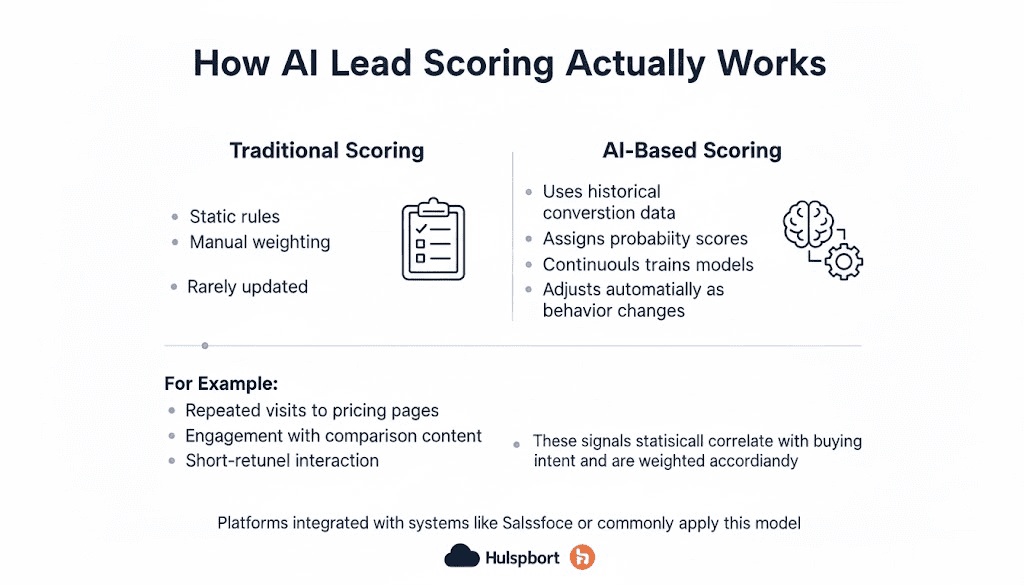
Traditional Scoring

  • Static rules
  • Manual weighting
  • Rarely updated

AI-Based Scoring

  • Uses historical conversion data
  • Assigns probability scores
  • Continuously trains models
  • Adjusts automatically as behavior changes

For example:

  • Repeated visits to pricing pages
  • Engagement with comparison content
  • Short return intervals
  • Multi-channel interaction

These signals statistically correlate with buying intent and are weighted accordingly.

Platforms integrated with systems like Salesforce or HubSpot commonly apply this model.

Using AI for Lead Segmentation

Segmentation is where AI becomes operationally valuable.

Instead of broad segments like “industry” or “company size,” AI creates clusters based on:

  • Behavioral similarity
  • Engagement velocity
  • Funnel position
  • Content consumption patterns

This allows marketers to:

  • Send fewer but more relevant messages
  • Avoid over-nurturing cold leads
  • Align messaging with the intent stage

AI in B2B Lead Generation: Practical Use Cases

B2B buying decisions involve multiple stakeholders and long evaluation periods. AI helps manage this complexity.

Account-Level Intelligence

AI platforms track engagement across multiple contacts within one organization and aggregate intent signals at the account level.

Buying Committee Detection

By analyzing role-based behavior, AI can identify decision-makers vs. influencers.

Pipeline Prioritization

Sales teams receive ranked accounts based on readiness, not just activity volume.

A detailed, step-by-step explanation of B2B execution is covered here: How to Generate B2B Leads Successfully

How AI Automates Lead Engagement (Without Losing Control)

Automation does not mean loss of oversight.

AI platforms typically automate:

  • Email sequencing triggers
  • Chat responses for common queries
  • Lead routing to sales teams
  • Ad retargeting based on behavior

Human teams still:

  • Approve messaging
  • Set engagement rules
  • Monitor model performance
  • Handle high-value conversations

This balance ensures compliance, accuracy, and brand consistency.

Evaluating AI Lead Generation Platforms

Choosing an AI platform should be evidence-based.

What to Ask Vendors

  1. What data is used to train models?
  2. How often are models retrained?
  3. Can lead scoring logic be reviewed?
  4. How is data privacy handled?
  5. What integrations are native?

A current comparison of tools and capabilities is available here: Best Platforms for Lead Generation

Data Privacy, Compliance, and Trust

AI systems must operate within strict ethical and legal boundaries.

Reliable platforms:

  • Use consent-driven data
  • Support GDPR and regional regulations
  • Offer audit logs
  • Allow manual overrides

Trust directly affects lead quality. Users who understand data usage are more likely to engage honestly.

Measuring Real Performance

AI metrics should connect directly to revenue.

Key indicators:

  • Lead-to-opportunity ratio
  • Sales-qualified lead accuracy
  • Cost per opportunity
  • Conversion time reduction

Validation through tools like Google Analytics ensures performance claims are grounded in real data.

How AI Supports Search and Content Strategy

AI platforms analyze search intent and content performance, but do not replace expertise.

Effective teams use AI to:

  • Identify information gaps
  • Improve content relevance
  • Align topics with buyer stages
  • Reduce bounce rates

Human-written content remains essential for trust, clarity, and long-term visibility.

Frequently Asked Questions (FAQs)

Does AI require large datasets to work?

AI performs better with more data, but many platforms work effectively with moderate volumes using pre-trained models.

Is AI lead generation suitable for regulated industries?

Yes, if platforms follow compliance standards and allow human oversight.

Can AI misclassify leads?

Yes. Regular monitoring and feedback loops are required to maintain accuracy.

How long does model training take?

Initial models may work immediately, but optimization improves over weeks or months.

Conclusion

AI lead generation works when it is understood, monitored, and aligned with real business goals.

It improves focus, reduces wasted effort, and helps teams respond to real intent, not assumptions. Businesses that treat AI as a decision-support system, rather than a shortcut, gain measurable, sustainable growth built on trust and data-driven insight.

Lead Generation Platform

What Is a Lead Generation Platform and How Do...

What Is a Lead Generation Platform?

A lead generation platform is a digital system designed to help businesses find, attract, capture, qualify, and manage potential customers who show interest in their products or services. Instead of relying on cold outreach or guesswork, these platforms use data, automation, and analytics to connect companies with people who are more likely to convert.

In today’s data-driven economy, lead generation platforms have become a core growth engine for startups, enterprises, B2B service providers, and SaaS companies. They replace manual prospecting with scalable, measurable, and repeatable processes that build revenue faster and smarter.

This guide is written and reviewed by professionals with hands-on experience in digital marketing, sales operations, and AI-powered growth systems. The goal is simple. Help you understand lead generation platforms clearly so you can make confident, informed decisions.

Why Lead Generation Platforms Matter More Than Ever

Buying behavior has changed. Customers research online, compare options, and expect relevant communication. Businesses that rely only on outbound sales struggle to keep up.

Lead generation platforms matter because they:

  • Reduce wasted time spent on unqualified prospects
  • Improve conversion rates through better targeting
  • Provide measurable insights into buyer behavior
  • Support remote and global sales teams
  • Create predictable growth instead of random wins

Well-established research in digital marketing shows that companies using structured lead generation systems achieve higher ROI and shorter sales cycles compared to those using manual methods. This consensus is widely supported by industry leaders in marketing automation and CRM technologies.

How a Lead Generation Platform Works

At its core, a lead generation platform follows a logical, proven process. Each stage builds trust and moves prospects closer to a decision.

1. Traffic and Interest Capture

The platform attracts users through channels such as:

  • Search engines
  • Social media
  • Content marketing
  • Paid advertising
  • Partnerships

Visitors land on optimized pages where they exchange basic information for value such as insights, tools, or opportunities.

2. Lead Data Collection

The system securely collects and stores data like:

  • Name and email
  • Company details
  • Job role
  • Industry
  • Behavior and intent signals

Modern platforms follow privacy standards and data protection regulations to ensure trust and compliance.

3. Lead Qualification

Not every lead is equal. Platforms use scoring models based on:

  • Engagement level
  • Demographics
  • Buying intent
  • Past interactions

This ensures sales teams focus only on high-potential prospects.

4. Lead Nurturing

Through automated emails, notifications, or personalized content, leads are educated and guided until they are ready to convert.

5. Analytics and Optimization

Dashboards track performance, conversion rates, and ROI, allowing continuous improvement.

Key Features of a Powerful Lead Generation Platform

While platforms vary, trusted solutions share essential features.

  • Lead capture forms and landing pages
  • CRM or CRM integration
  • Automation workflows
  • Lead scoring and segmentation
  • Verified contact data
  • Analytics and reporting
  • Secure data handling

These features work together to reduce friction and increase confidence for both businesses and prospects.

Types of Lead Generation Platforms

Different business models require different approaches. Understanding the types helps you choose wisely.

B2B Lead Generation Platforms

Designed for business buyers, these focus on:

  • Company data
  • Decision makers
  • Industry relevance

If you want deeper insight into proven B2B methods, explore How to Generate B2B Leads, which explains strategies aligned with modern platforms.

B2C Lead Generation Platforms

These target individual consumers using volume, personalization, and behavioral triggers.

AI-Powered Lead Platforms

AI enhances accuracy by analyzing large datasets, predicting intent, and improving targeting over time.

Marketplace-Style Platforms

These connect service providers directly with verified opportunities, reducing competition and guesswork.

Lead Generation Platforms vs Traditional Sales Methods

Traditional sales rely heavily on cold calls, purchased lists, and manual follow-ups. Lead generation platforms change this dynamic.

Traditional Sales

  • High effort, low precision
  • Limited data visibility
  • Slow scaling

Lead Generation Platforms

  • Data-driven targeting
  • Automation at scale
  • Transparent performance tracking

This shift mirrors broader workplace changes. As explained in What is a Remote Job, digital systems now support distributed teams that rely on technology instead of physical offices.

Benefits of Using a Lead Generation Platform

The benefits go beyond convenience. They create structural advantages.

  • Higher quality leads
  • Lower customer acquisition costs
  • Faster sales cycles
  • Better alignment between marketing and sales
  • Stronger forecasting accuracy

Businesses gain confidence because decisions are backed by data, not assumptions.

Who Should Use a Lead Generation Platform?

Lead generation platforms are valuable for:

  • SaaS companies
  • Marketing agencies
  • Recruitment firms
  • Consultants and freelancers
  • Enterprises with long sales cycles
  • Remote-first businesses

As work models evolve, professionals increasingly compare flexibility and income stability. The discussion around Remote Work vs Freelancing highlights why reliable lead flow is critical for independent and distributed teams.

Trust, Security, and Data Ethics

Trust is not optional. High-quality platforms invest in:

  • Secure infrastructure
  • Transparent data usage policies
  • Compliance with privacy laws
  • Ethical data sourcing

Industry consensus strongly supports ethical lead generation practices because trust directly impacts conversion and brand reputation.

How to Choose the Right Lead Generation Platform

Before choosing, ask clear questions.

  1. Are the leads verified and relevant?
  2. Is pricing transparent and predictable?
  3. Does it integrate with existing tools?
  4. Are analytics easy to understand?
  5. Is support available when needed?

Choosing the right platform is not about features alone. It is about alignment with your growth goals.

Common Myths About Lead Generation Platforms

Let’s clear a few misconceptions.

  • More leads do not always mean better leads
  • Automation does not remove human judgment
  • Quality platforms support long-term growth, not quick tricks

Successful companies treat lead generation as a strategic investment, not a shortcut.

The Future of Lead Generation Platforms

The future is intelligent, ethical, and user-focused.

  • AI-driven intent analysis
  • Deeper personalization
  • Real-time verification
  • Stronger privacy controls

As digital ecosystems mature, lead generation platforms will continue to replace outdated sales models.

Frequently Asked Questions (FAQs)

What is the main purpose of a lead generation platform?

The main purpose is to attract and qualify potential customers so businesses can focus on converting high-intent leads instead of chasing random prospects.

Are lead generation platforms only for large companies?

No. Many platforms are built for startups, freelancers, and mid-sized businesses looking for predictable growth.

How long does it take to see results?

Results depend on strategy and industry, but most businesses see measurable improvements within weeks when systems are used correctly.

Do lead generation platforms replace sales teams?

No. They support sales teams by improving efficiency, data quality, and focus.

Is lead generation ethical?

Yes, when platforms follow transparent data practices, consent standards, and privacy regulations.

Conclusion

A lead generation platform is more than a tool. It is a growth foundation built on trust, data, and efficiency. By connecting businesses with the right prospects at the right time, these platforms remove uncertainty and unlock consistent opportunity.

For companies serious about sustainable growth, investing in the right lead generation platform is not optional. It is a confident step toward smarter sales, stronger relationships, and long-term success.

Lead Generation Platform

Which Platform Is Best for Lead Generation in...

Lead generation is no longer about collecting random contact details. In 2025, the best lead generation platform is one that delivers verified prospects, buying intent, speed, and trust while supporting long term business growth. With dozens of tools promising results, businesses often ask one critical question: which platform is truly best for lead generation?

This expert-written guide answers that question clearly. It compares major lead generation platforms, explains how they work, and shows which option delivers the highest value for modern businesses, startups, and B2B teams.

This article is written for decision makers, founders, marketers, and sales leaders who want reliable, scalable, and ethical lead generation backed by industry consensus and proven practices.

Understanding What Makes a Lead Generation Platform Truly Effective

A lead generation platform is a system that helps businesses identify, attract, verify, and connect with potential customers. According to widely accepted marketing frameworks, effective lead generation depends on relevance, timing, data accuracy, and trust.

Industry research consistently confirms that high intent leads outperform high volume leads. This is why the best platforms focus on quality rather than raw numbers.

A strong lead generation platform should provide:

  • Verified and accurate contact data
  • Clear buyer intent signals
  • Segmentation by industry, role, and location
  • Compliance with data protection standards
  • Integration with sales and CRM workflows

Platforms that fail in these areas often create wasted outreach, low response rates, and damaged brand credibility.

Types of Lead Generation Platforms Explained

Before identifying the best option, it is important to understand the main categories of lead generation platforms available today.

CRM Based Lead Generation Platforms

CRM systems like HubSpot and Salesforce help organize contacts and manage pipelines. While they do not generate leads on their own, they support lead capture through forms, landing pages, and email campaigns.

To understand this model more deeply, read How CRM Platforms Generate Leads, which explains how CRMs support inbound and outbound strategies when paired with marketing systems.

Best for

  • Managing existing leads
  • Tracking sales activity
  • Nurturing long-term relationships

Limitations

  • Do not provide verified new leads
  • Depend heavily on external traffic sources

Outbound Lead Databases and Prospecting Tools

Tools like Apollo, ZoomInfo, and Lusha offer large databases of business contacts. These platforms allow filtering by job title, company size, and industry.

Strengths

  • Fast access to contact lists
  • Useful for outbound sales teams

Weaknesses

  • Data accuracy varies
  • High competition for the same leads
  • Limited buyer intent insights

Sales research shows that cold outreach without intent signals results in significantly lower conversion rates.

Inbound Marketing and Content Platforms

SEO driven platforms focus on blogs, ads, and lead magnets to attract users organically. This approach builds authority and trust over time.

For proven inbound strategies, explore How to Generate B2B Leads, which outlines expert-approved methods used by high-growth companies.

Advantages

  • Builds brand credibility
  • Long-term ROI

Challenges

  • Slow results
  • Requires strong content investment

AI-Powered Lead-Generation Platforms

AI-based platforms represent the fastest-growing segment in lead generation technology. These systems use machine learning, behavioral data, and automation to identify high-intent prospects.

Research consensus confirms that AI improves lead scoring accuracy, targeting precision, and response timing.

A deeper look into this evolution is available in AI Automation in B2B Lead Generation, which explains how automation improves sales efficiency and growth outcomes.

Which Platform Is Best for Lead Generation Overall?

When evaluated against quality, intent, speed, cost efficiency, and trust, AI-driven lead generation platforms with verified data access rank as the best overall option in 2025.

These platforms outperform traditional tools because they focus on real opportunities instead of crowded databases.

Why AI-Driven Lead Generation Platforms Lead the Market

  • Identify prospects already searching for services
  • Provide direct access to decision makers
  • Reduce time spent on manual prospecting
  • Improve close rates through intent-based matching
  • Support ethical and transparent outreach

Businesses using AI-powered lead generation consistently report higher reply rates, shorter sales cycles, and stronger customer relationships.

Key Features That Define the Best Lead Generation Platform

The best platforms share several critical features that directly impact performance and trust.

Verified and Actionable Lead Data

Accuracy matters more than volume. Platforms that verify contact details reduce bounce rates and protect sender reputation.

Intent Driven Matching

High-performing platforms track signals such as job postings, funding events, technology usage, and service demand.

Industry and Role Specific Targeting

Effective lead generation depends on reaching the right people, not everyone.

Ethical Data Practices

Compliance with GDPR and data transparency builds long-term trust and brand credibility.

Flexible Pricing Models

Platforms that avoid long term contracts and offer usage-based pricing give businesses better control.

Comparing Popular Lead Generation Platforms

Here is a practical comparison based on expert evaluation and user outcomes.

CRM Tools

Best for managing relationships, not generating new leads.

Contact Databases

Best for cold outreach at scale, limited intent insight.

Inbound Marketing Platforms

Best for long-term authority building, slow conversions.

AI Lead Generation Platforms

Best for high-intent leads, speed, and measurable ROI.

From a strategic standpoint, AI-powered platforms deliver the strongest balance of speed, accuracy, and trust.

How the Right Platform Builds Long-Term Business Growth

Lead generation is not just about sales. It directly impacts brand perception, customer experience, and lifetime value.

A reliable platform helps businesses:

  • Reduce acquisition costs
  • Improve sales team morale
  • Build predictable revenue pipelines
  • Strengthen market positioning

Modern buyers expect relevance and value from the first interaction. Platforms that support this expectation outperform outdated mass outreach systems.

Trust, Security, and Transparency Matter More Than Ever

Search engines, users, and regulators all prioritize trust. The best lead generation platforms clearly explain:

  • Where data comes from
  • How leads are verified
  • How user privacy is protected
  • What results users can expect

This transparency aligns with E-A-T principles and builds long-term authority.

Expert Opinion on Choosing the Right Lead Generation Platform

Industry experts agree that there is no universal solution for every business. However, consensus shows that platforms combining AI intelligence, verified data, and intent-driven matching consistently deliver the strongest outcomes.

Businesses that focus on value-driven lead generation instead of shortcuts build stronger pipelines and better reputations.

Frequently Asked Questions (FAQs)

Which lead generation platform works best for B2B companies?

AI-powered B2B lead generation platforms perform best because they identify decision makers with real buying intent.

Are free lead generation tools reliable?

Free tools may help with early research, but they rarely provide verified or high-intent leads.

Is AI lead generation suitable for small businesses?

Yes. Many AI platforms offer flexible pricing and help small teams compete with larger organizations.

How long does it take to see results from a lead generation platform?

AI-driven platforms can deliver results within days, while inbound strategies take weeks or months.

What matters more, lead volume or lead quality?

Quality matters more. High intent leads convert faster and cost less over time.

Conclsuion

In 2025, the best platform for lead generation is one that prioritizes intent, accuracy, speed, and trust. AI-powered lead generation platforms stand out because they match real business needs with verified opportunities, eliminating wasted effort and guesswork.

For companies serious about growth, choosing the right platform is not just a marketing decision. It is a strategic investment in sustainable success.

If you would like, I can also provide meta title options, a meta description, or internal content structure suggestions optimized for search and AI discovery.