






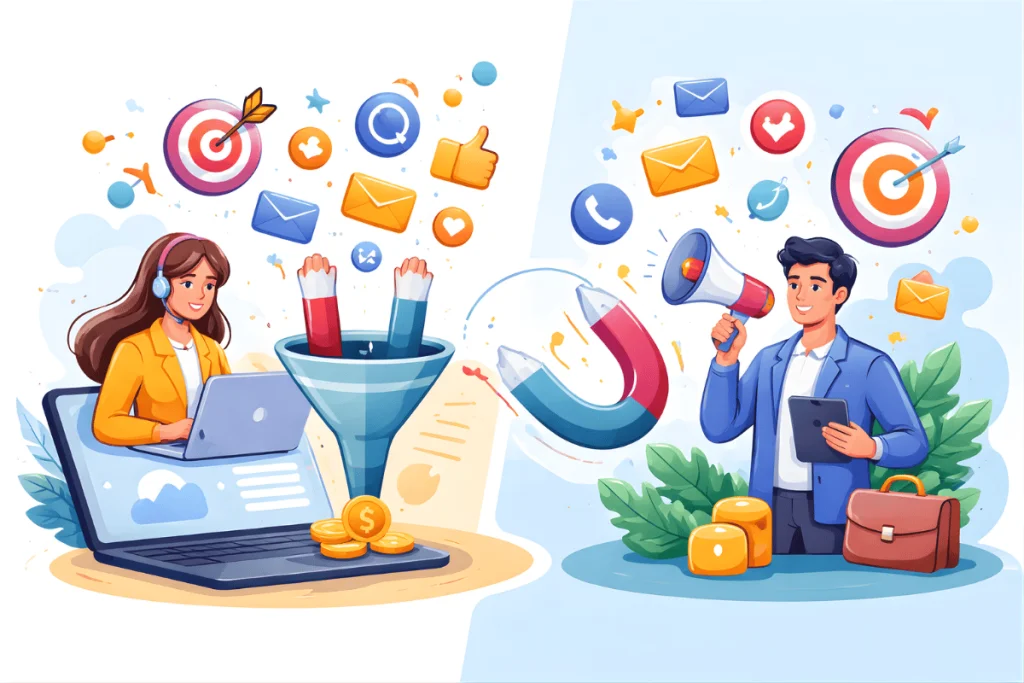

For tech companies, growth depends on one thing: consistent, high-quality leads. But generating those leads isn’t always straightforward. Businesses often find themselves choosing between two core strategies: inbound and outbound lead generation.
Inbound focuses on attracting potential customers naturally, while outbound takes a direct approach to reach prospects. Both methods are effective, but in different ways.
Instead of choosing blindly, understanding how each strategy works can help you build a smarter, more scalable lead generation platform.
Understanding Inbound Lead Generation
Inbound lead generation is about attracting the right audience by offering value. Instead of chasing prospects, you create content and experiences that draw them in.
This includes:
- SEO-optimized blogs
- Educational content and guides
- Social media engagement
- Webinars and tutorials
The idea is simple: when people search for solutions, your brand shows up. Over time, this builds trust and positions your company as an authority.
Understanding Outbound Lead Generation
Outbound lead generation takes a more proactive approach. Instead of waiting for prospects to find you, you reach out to them directly.
Common outbound methods include:
- Cold emails and calls
- Paid advertising campaigns
- LinkedIn outreach
- Direct messaging strategies
Outbound gives you control; you decide who to target, when to reach out, and how to present your offer.
Inbound vs Outbound: What Really Sets Them Apart
At a glance, inbound and outbound may seem like opposites, but the real differences lie in execution and outcomes.
Approach
Inbound attracts users through helpful content and organic discovery.
Outbound pushes your message directly to potential customers.
Cost Structure
Inbound requires time and effort upfront, but becomes cost-efficient over time.
Outbound demands continuous investment to maintain results.
Lead Quality
Inbound leads often have higher intent since they actively seek solutions.
Outbound leads may need nurturing, but can be highly targeted.
Speed of Results
Inbound takes time to build but delivers long-term value.
Outbound produces faster results but may not sustain without effort.
Inbound vs Outbound Lead Generation: Quick Comparison Table
| Factor | Inbound Lead Generation | Outbound Lead Generation |
| Approach | Pull strategy (attracts leads) | Push strategy (reaches out to leads) |
| Cost | Lower long-term cost | Higher ongoing cost |
| Lead Quality | High-intent, more qualified leads | A broader audience requires nurturing |
| Time to Results | Slower but sustainable | Faster but less sustainable |
| Scalability | Grows over time with content | Scales quickly with budget |
| Customer Trust | Builds trust through value | Needs effort to build trust |
| Best For | Long-term growth and brand authority | Quick results and targeted outreach |
Why Inbound Works Well for Tech Companies
Tech products often require education. Customers want to understand features, benefits, and use cases before making decisions.
Builds Credibility
Consistent content positions your brand as a trusted expert.
Attracts the Right Audience
SEO ensures you reach users already searching for your solution.
Delivers Long-Term Value
A well-ranked blog or guide can generate leads for months or even years.
Inbound is ideal for companies focused on sustainable growth.
Why Outbound Still Matters
While inbound builds long-term momentum, outbound delivers immediate impact.
Quick Lead Generation
You can reach potential customers instantly.
Highly Targeted Campaigns
Focus on specific industries, job roles, or companies.
Scalable Growth
With the right tools, outbound campaigns can expand rapidly.
Outbound is especially useful for startups and product launches.
Challenges You Shouldn’t Ignore
No strategy is perfect. Both inbound and outbound come with limitations.
Inbound Challenges
- Requires patience and consistency
- Content creation can be time-consuming
- SEO results take time
Outbound Challenges
- Lower response rates
- Can feel intrusive if poorly executed
- Requires ongoing budget
Understanding these challenges helps you plan more effectively.
Which Strategy Should You Choose?
The answer depends on your goals, resources, and stage of growth.
Go with Inbound If You:
- Want long-term, sustainable growth
- Are you building brand authority
- Can invest time in content and SEO
Choose Outbound If You:
- Need quick results
- Want to target specific prospects
- Are you launching a new product or service
The best strategy often isn’t choosing one, it’s combining both.
A Smarter Strategy: Combining Inbound and Outbound
High-performing tech companies don’t rely on a single approach; they integrate both.
How to Combine Them Effectively
- Use inbound content to educate and attract
- Use outbound to connect with high-value leads
- Retarget inbound visitors through outbound campaigns
This hybrid strategy creates a balanced system, one that generates leads consistently while scaling growth.
Tools That Support Lead Generation
To execute your strategy effectively, the right tools are essential.
- CRM platforms to manage and track leads.
- Automation tools for email campaigns and workflows
- Analytics platforms to measure performance
These tools help you stay organized and improve results over time.
Modern Platforms for Smarter Lead Generation
Choosing the right platform plays a crucial role in improving your AI lead generation strategy. A well-structured platform helps businesses streamline outreach, manage leads efficiently, and track performance in one place.
Ojiiz is designed to support modern businesses by offering a centralized solution for managing leads and connecting with opportunities. It simplifies communication, enhances workflow efficiency, and helps companies maintain a consistent pipeline of prospects.
Conclusion
Inbound and outbound lead generation are not rivals; they are complementary.
Inbound builds trust, authority, and long-term growth.
Outbound delivers speed, control, and immediate results.
For tech companies, success lies in balance. By combining both strategies, you can attract the right audience, engage effectively, and convert leads into customers.
Start small, test different approaches, and refine your strategy over time. The right mix will not only generate leads but drive real business growth.
Frequently Asked Questions (FAQs)
1. Which is more effective for tech companies, inbound or outbound?
Both are effective in different ways. Inbound is better for long-term growth, while outbound is ideal for quick lead generation.
2. How long does inbound lead generation take?
Inbound strategies typically take a few months to show results, but they provide long-term benefits.
3. Is outbound lead generation expensive?
It can be, as it requires ongoing investment in tools, ads, and outreach campaigns.
4. Can startups use inbound marketing effectively?
Yes, but it requires consistency and time. Many startups combine inbound with outbound for faster results.
5. What is the main advantage of inbound lead generation?
It attracts high-quality, high-intent leads and builds long-term brand authority.
6. How can I improve outbound lead response rates?
Focus on personalization, targeting the right audience, and delivering clear value in your messaging.