





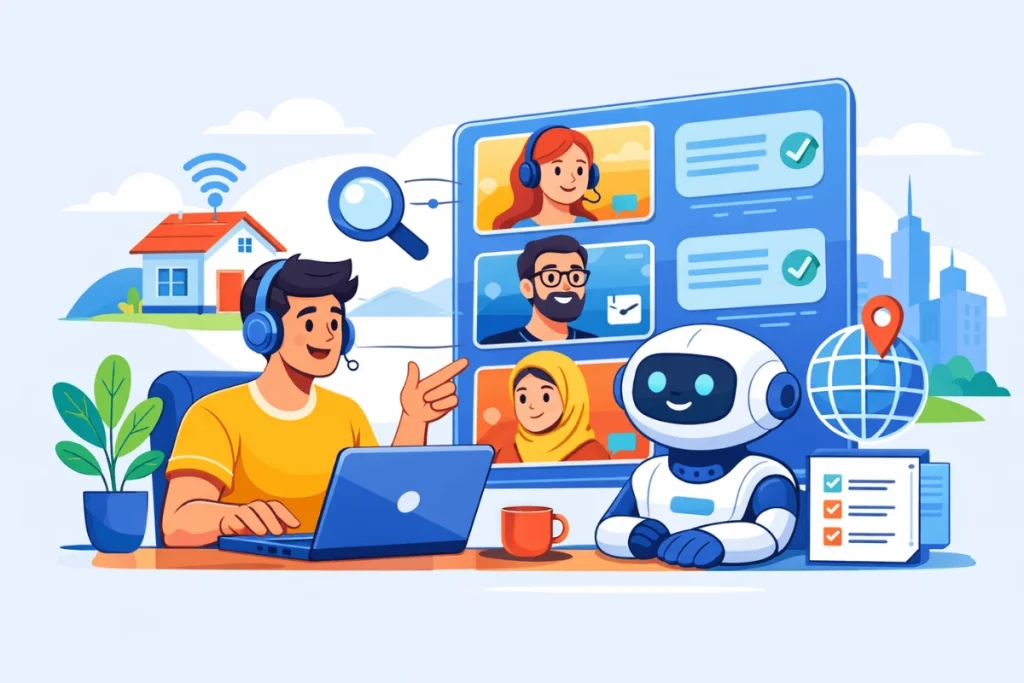

Remote hiring is no longer a temporary response to global disruption. It is a strategic advantage. Startups, in particular, have embraced artificial intelligence to hire faster, smarter, and across borders without losing quality or trust.
This article is written by professionals who work closely with remote hiring platforms, AI recruitment systems, and global startups. Its purpose is simple. To explain how AI is actively used in remote hiring today, why it works, and how startups can apply it responsibly while building trust with candidates and teams.
The excitement around AI hiring is justified. Decades of research in organizational psychology, data science, and human resource management support the idea that structured, data-assisted hiring leads to better outcomes than intuition alone. AI does not replace human judgment. It strengthens it.
Why Startups Are Turning to AI for Remote Hiring
Startups operate under pressure. Limited budgets. Small teams. Aggressive growth targets. Remote hiring opens access to global talent, but it also introduces complexity.
AI helps startups manage that complexity with confidence.
Key reasons startups adopt AI in remote hiring include:
- Faster screening without sacrificing accuracy
- Reduced unconscious bias through structured evaluation
- Better candidate matching based on skills, not location
- Lower hiring costs compared to traditional agencies
- Data-driven decisions instead of gut feeling
Well-established research in industrial psychology shows that structured assessments outperform unstructured interviews in predicting job performance. AI applies this structure at scale.
How AI Transforms the Remote Hiring Process Step by Step
AI does not magically hire people. It improves each stage of the hiring funnel.
1. Job Definition and Role Clarity
AI tools analyze thousands of job descriptions and performance outcomes to help startups define roles more precisely. Clear role definition improves applicant quality and reduces mismatches.
Instead of vague requirements, startups get:
- Skill-based role descriptions
- Realistic experience expectations
- Market-aligned salary ranges
This aligns with research consensus that clear expectations increase employee retention.
2. Talent Sourcing Across Borders
AI sourcing tools scan global talent pools across platforms, portfolios, and professional networks. They identify candidates based on skills, experience, and work history rather than geography.
This is where remote hiring truly scales.
Many startups align their sourcing strategies with insights from Remote Hiring Trends 2026, which explains how global companies are redefining work and talent access.
AI ensures startups do not miss high-potential candidates simply because they are outside traditional markets.
3. Intelligent Resume and Profile Screening
Manual resume screening is slow and inconsistent. AI systems evaluate profiles using predefined criteria tied directly to job success indicators.
What AI evaluates:
- Skills relevance
- Project history
- Tools and technologies used
- Evidence of remote work experience
Importantly, modern AI hiring tools are trained to avoid sensitive attributes such as age, gender, or ethnicity, supporting ethical and compliant hiring practices.
Scientific consensus supports blind and structured screening as one of the most effective ways to reduce bias.
4. Skill-Based Assessments and Work Simulations
Startups increasingly prioritize what candidates can do over where they studied.
AI enables:
- Coding tests for developers
- Case simulations for marketers
- Data tasks for analysts
- Writing samples for content roles
These assessments are automatically scored using consistent criteria, improving fairness and predictive accuracy.
Research shows work sample tests are among the strongest predictors of job performance.
AI Interviews and Candidate Evaluation
Remote interviews are no longer limited to video calls.
AI-supported interviews help startups evaluate candidates more objectively while saving time.
How AI assists the interview
- Structured question frameworks
- Automated scheduling across time zones
- Consistent evaluation rubrics
- Sentiment and response analysis used cautiously
Ethical startups use AI as a decision support system, not a final judge. Human hiring managers always make the final call.
Transparency matters. Candidates should always know when AI is part of the process.
Matching Candidates to Startup Culture Using Data
Culture fit is often misunderstood. It should not mean sameness. It should mean alignment with values and ways of working.
AI evaluates:
- Communication patterns
- Collaboration preferences
- Work style compatibility
- Experience in distributed teams
This helps startups build diverse teams that still work well together.
Studies in organizational behavior consistently show that values alignment improves engagement and long-term performance.
Skills That Matter Most in AI-Driven Remote Hiring
AI hiring systems prioritize skills that predict success in remote environments.
Commonly assessed skills include
- Self-management and accountability
- Clear written communication
- Problem-solving ability
- Technical proficiency
- Adaptability to async work
Startups often reference insights from Top In-Demand Remote Skills to align hiring with future workforce needs.
AI ensures these skills are evaluated consistently rather than subjectively.
Building Trust in AI-Powered Hiring
Trust is critical. Candidates want fairness. Startups want accuracy.
Best practices for trustworthy AI hiring include
- Clear disclosure of AI use
- Human oversight at every stage
- Regular audits for bias and accuracy
- Data privacy and security compliance
Scientific and legal consensus emphasizes transparency and accountability in AI systems. Responsible startups follow these principles to protect both candidates and brand reputation.
How Startups Use AI to Reduce Hiring Costs
AI reduces cost without cutting corners.
Cost savings come from:
- Fewer manual hours spent screening
- Lower dependency on recruiters
- Reduced mis-hires
- Faster time to productivity
For early-stage startups, these savings can be reinvested into product growth and team development.
Real-World Use Case: AI Hiring in a Growing Startup
Consider a SaaS startup hiring a remote product designer.
Without AI:
- Hundreds of applications
- Weeks of screening
- Subjective portfolio reviews
With AI:
- Automated skill screening
- Portfolio pattern analysis
- Structured interview scoring
The result is faster hiring, better role fit, and higher retention.
This approach is now common across tech, marketing, operations, and customer support roles.
Platforms That Support AI-Driven Remote Hiring
Modern startups rely on platforms that combine AI, verified opportunities, and real human oversight.
One example is Ojiiz, which connects professionals and startups through AI-assisted matching while maintaining transparency and verified project details.
The focus is not volume. It is relevance and trust.
The Future of AI in Remote Hiring
AI hiring is evolving quickly, but its direction is clear.
Future developments include:
- Better explainability of AI decisions
- Improved bias detection models
- More adaptive skill assessments
- Stronger compliance frameworks
The consensus across technology and HR research communities is that AI will remain a support system, not a replacement for human judgment.
Startups that understand this balance will win.
Frequently Asked Questions (FAQs)
Is AI hiring reliable for startups?
Yes. When used responsibly with human oversight, AI improves consistency and predictive accuracy.
Does AI replace human recruiters?
No. AI supports recruiters by handling repetitive tasks and providing data-driven insights.
Is AI hiring fair for candidates?
Structured and transparent AI systems reduce bias compared to unstructured human decisions.
Can small startups afford AI hiring tools?
Many platforms offer scalable pricing designed for early-stage companies.
Is remote hiring with AI legally compliant?
Yes, when platforms follow data protection, transparency, and employment regulations.
Conclusion
AI has changed how startups hire remotely, not by removing people, but by empowering better decisions.
Startups that use AI thoughtfully gain speed, fairness, and confidence. Candidates benefit from clearer expectations and more objective evaluation.
Remote hiring powered by AI is not a trend. It is a smarter way to build teams that last.