





Our Blogs

Expert insights on remote work, client acquisition, and project success discover strategies that help you grow smarter and faster with Ojiiz.
Remote Skills

Top In-Demand Remote Skills You Need to Succe...

Remote work is no longer a temporary shift or a workplace trend. It is now a mature, global employment model backed by data, technology, and long-term business strategy. According to well-established labor market research from organizations such as the World Economic Forum, McKinsey, and LinkedIn Economic Graph, companies worldwide are prioritizing remote-ready skills that deliver results without location dependency.

This expert-written guide explains the most in-demand remote skills for 2025, why they matter, and how professionals can position themselves for long-term success. The goal is simple: help you build confidence, clarity, and excitement about your remote career path while sharing fact-based insights you can trust.

Why Remote Skills Matter More Than Ever in 2025

Remote work has evolved into a productivity-driven system powered by digital collaboration, cloud infrastructure, and outcome-based hiring. Research consistently shows that organizations now hire for skills over location, credentials, or traditional job history.

A remote skill is not just something you know. It is something you can deliver independently, communicate clearly, and improve continuously across borders and time zones.

To understand the foundation of this shift, explore, What is a Remote Job, which explains how remote roles are structured and why companies prefer them.

The most successful professionals in 2025 combine technical capability, digital confidence, and human-centered skills that support collaboration and trust.

Top In-Demand Remote Skills You Need to Succeed in 2025

1. Artificial Intelligence and Automation Literacy

AI is no longer limited to engineers. In 2025, professionals across marketing, operations, finance, and customer support are expected to understand how AI tools work and how to apply them responsibly.

High-value AI-related skills include:

  • Prompt engineering for AI systems
  • Workflow automation using AI tools
  • Understanding AI ethics and explainability
  • Using AI for research, analysis, and optimization

Scientific consensus supports that AI augments human decision-making rather than replacing it when applied correctly. Professionals who can work alongside AI are significantly more employable.

2. Software Development and Engineering Skills

Software development remains one of the strongest pillars of remote hiring. Companies favor remote developers due to scalable collaboration and global talent access.

In-demand development skills include:

  • JavaScript frameworks and backend development
  • Mobile app development
  • Cloud native development
  • API integration and microservices

If you want a deeper look into high-paying roles, explore Top 10 Remote Tech Jobs, which highlights future-proof paths backed by market demand.

3. Cybersecurity and Data Protection Expertise

With remote work comes increased security risk. This makes cybersecurity one of the fastest-growing remote skill areas.

Key cybersecurity skills include:

  • Cloud security practices
  • Risk assessment and threat modeling
  • Compliance awareness
  • Incident response planning

Industry standards such as zero trust architecture are now widely adopted, making cybersecurity knowledge valuable across technical and non-technical roles.

4. Data Analysis and Data Literacy

Remote businesses depend heavily on data-driven decisions. Professionals who can interpret, visualize, and communicate data insights are essential.

High-demand data skills include:

  • Data visualization tools
  • Statistical reasoning
  • Business intelligence reporting
  • Data storytelling for non-technical teams

Scientific research consistently shows that data-driven organizations outperform competitors in efficiency and innovation.

5. Digital Marketing and Growth Strategy

Remote companies rely on digital channels to acquire customers globally. This makes performance-based marketing skills extremely valuable.

In-demand digital marketing skills include:

  • Search engine optimization and content strategy
  • Paid advertising and analytics
  • Conversion optimization
  • Email marketing automation

These skills are measurable, scalable, and transferable across industries, making them ideal for remote careers.

6. Product Management and UX Strategy

Product-focused roles are increasingly remote as collaboration tools improve. Product managers bridge business goals, user needs, and technical execution.

Core product skills include:

  • User research and usability testing
  • Roadmap planning
  • Agile and Scrum frameworks
  • Stakeholder communication

UX research backed by cognitive science consistently confirms that user-centered design improves retention and satisfaction.

7. Technical Writing and Documentation

Clear communication is the backbone of remote teams. Technical writers and documentation specialists play a critical role in scaling remote operations.

High-value documentation skills include:

  • Writing user guides and API docs
  • Knowledge base creation
  • Process documentation
  • Information architecture

Strong documentation reduces errors, improves onboarding, and increases trust across distributed teams.

8. Project-Based Execution and Delivery Skills

Companies increasingly prefer project-based engagement over long-term contracts. This model allows flexibility while ensuring accountability.

If you are a developer or technical professional, Project-Based Remote Roles for Developers explains how this approach creates growth opportunities.

Essential project execution skills include:

  • Time management
  • Outcome-based planning
  • Client communication
  • Delivery documentation

9. Communication and Remote Collaboration Skills

Human skills remain essential. Research from organizational psychology confirms that emotional intelligence and communication directly impact team performance.

Critical remote communication skills include:

  • Clear written communication
  • Asynchronous collaboration
  • Constructive feedback
  • Cultural awareness

These skills strengthen trust, reduce conflict, and improve long-term working relationships.

10. Self-Management and Independent Work Skills

Remote professionals are evaluated by results, not presence. Self-management is a skill that directly impacts performance.

Core self-management abilities include:

  • Goal setting
  • Focus and prioritization
  • Accountability
  • Continuous learning

These skills are often overlooked but strongly correlated with long-term remote success.

How to Build Trust as a Remote Professional

Trust is currency in remote work. Employers look for professionals who demonstrate reliability and clarity.

To build trust:

  • Maintain transparent communication
  • Document your work clearly
  • Use secure tools and platforms
  • Respect deadlines and feedback

Remote success is not about working longer hours. It is about delivering consistent value.

Who Created This Guide and Why

This article was created by professionals with over a decade of experience in remote hiring, digital transformation, and global workforce strategy. It is based on industry research, hiring trends, and proven best practices observed across technology, marketing, and consulting sectors.

The purpose of this guide is to help professionals make informed decisions, reduce career uncertainty, and build skills that matter in real hiring environments.

Frequently Asked Questions (FAQs)

What is the most in-demand remote skill in 2025?

AI literacy combined with a core technical or business skill is currently the most in-demand combination.

Can non-technical professionals succeed in remote roles?

Yes. Skills like digital marketing, product management, writing, and operations are highly valued in remote teams.

Do remote jobs require advanced degrees?

Most remote roles prioritize skills, experience, and outcomes over formal education.

How long does it take to learn a remote skill?

With focused learning, many remote skills can be developed to a professional level within six to twelve months.

Are remote jobs stable long-term?

Yes. Remote work is now embedded into long-term business strategies across industries.

Conclusion

The remote job market in 2025 rewards professionals who invest in relevant skills, clear communication, and continuous improvement. The opportunity is real, global, and growing.

By building the right skills today, you position yourself for freedom, growth, and confidence in a rapidly evolving world of work.

Remote success is not about where you live. It is about what you deliver.

Online Platforms for Lead Generation

How Businesses Use Online Platforms for Lead ...

In today’s fast-paced digital world, businesses cannot rely solely on traditional marketing methods to attract potential customers. Online platforms have become essential tools for generating high-quality leads, enabling companies to grow their client base, boost revenue, and build meaningful connections with their audience. Understanding how businesses use these platforms effectively can provide actionable insights for companies of all sizes.

What Is Lead Generation and Why It Matters

Lead generation is the process of identifying, attracting, and converting potential customers who show interest in a company’s products or services. According to industry research, businesses that actively focus on lead generation are 67% more likely to achieve revenue growth than those that do not. Lead generation is not just about collecting contacts; it’s about creating a pipeline of prospects that can be nurtured into loyal customers.

In the B2B context, What is a B2B Lead Generation strategies are particularly critical. They enable businesses to target decision-makers, build credibility, and streamline the sales process. These strategies are informed by data, analytics, and predictive insights, making lead generation more precise and results-oriented.

Online Platforms as Powerful Lead Generation Tools

Online platforms provide businesses with unprecedented reach, real-time analytics, and targeted engagement opportunities. The use of these platforms has transformed lead generation from a labor-intensive process into a highly efficient, technology-driven strategy.

Key benefits of using online platforms include:

  • Wider Audience Reach: Platforms like LinkedIn, Facebook, and industry-specific networks allow businesses to connect with prospects across geographies and industries.
  • Advanced Targeting: Businesses can segment audiences based on demographics, interests, job roles, and online behavior, ensuring the right message reaches the right people.
  • Cost-Effective Strategies: Compared to traditional advertising, online lead generation often requires lower investment while delivering higher ROI.
  • Real-Time Tracking and Analytics: Companies can measure engagement, conversion rates, and campaign effectiveness instantly, allowing for data-driven adjustments.

Popular Online Platforms for Lead Generation

Different platforms serve different business goals. Selecting the right platform depends on your target audience, industry, and objectives. Some of the most effective options include:

  1. Social Media Platforms
    Social media has evolved into a powerful lead generation engine. LinkedIn is particularly effective for B2B leads, while Facebook and Instagram excel in reaching B2C audiences. Businesses can use paid campaigns, organic content, and community engagement to attract prospects.
  2. Search Engine Marketing (SEM) and SEO
    Optimizing website content for search engines ensures that businesses appear in front of users actively seeking products or services. Paid search ads provide immediate visibility, while SEO efforts build long-term authority.
  3. Email Marketing Platforms
    Email remains one of the highest-converting lead generation channels. Platforms like Mailchimp or HubSpot enable businesses to send personalized messages, nurture leads, and track engagement metrics.
  4. AI-Driven Platforms
    AI-powered platforms can analyze patterns, predict buying behavior, and recommend strategies to maximize conversions. These platforms enhance efficiency by automating repetitive tasks and identifying the most promising leads. Businesses can explore AI Platforms Usage for Effective Lead Generation to understand advanced strategies and tools.
  5. Lead Generation Marketplaces
    Platforms that aggregate verified leads offer businesses direct access to decision-makers and projects. These marketplaces reduce time spent on prospecting and increase the likelihood of successful engagement. For insights on which platforms are most effective, refer to Best Platforms for Lead Generation.

Techniques for Effective Lead Generation on Online Platforms

Success in online lead generation depends on combining strategy, creativity, and technology. Businesses employ multiple techniques to attract and convert leads effectively:

  • Content Marketing: High-quality content, such as blogs, videos, and guides, positions businesses as thought leaders and attracts potential customers seeking valuable information.
  • Lead Magnets: Offering downloadable resources, free trials, or webinars in exchange for contact information encourages prospects to engage.
  • Retargeting Campaigns: By re-engaging users who previously interacted with a website or ad, businesses can increase conversion rates and reinforce brand recall.
  • Social Proof: Customer testimonials, reviews, and case studies build credibility, making prospects more likely to trust the business.
  • Landing Page Optimization: Well-designed landing pages with clear calls-to-action, minimal distractions, and persuasive copy significantly improve lead capture.
  • Behavioral Segmentation: Tracking user behavior enables businesses to send personalized messages at the right stage of the buyer journey.

Integrating Lead Generation Across Platforms

Modern businesses rarely rely on a single platform. Multi-channel lead generation ensures that prospects encounter the brand across multiple touchpoints, increasing familiarity and trust. For example, a business might:

  • Use LinkedIn to target professionals and collect initial leads.
  • Share educational blog content and videos to nurture leads via email.
  • Employ AI tools to identify high-potential leads for personalized follow-up.
  • Use retargeting ads on social media to encourage conversion.

This integrated approach ensures a consistent brand presence while leveraging the strengths of each platform.

Measuring and Optimizing Lead Generation Success

Accurate measurement is key to effective lead generation. Businesses should track:

  • Lead Quantity and Quality: Not all leads are equal. High-quality leads align with your ideal customer profile and have a higher likelihood of conversion.
  • Conversion Rates: Monitoring how many leads move through the sales funnel helps assess strategy effectiveness.
  • Cost Per Lead (CPL): Understanding CPL ensures campaigns remain cost-efficient and scalable.
  • Engagement Metrics: Click-through rates, email open rates, and social engagement provide insight into audience interest.

Advanced analytics platforms can automate these measurements, identify trends, and recommend adjustments for continuous improvement.

Challenges Businesses Face in Online Lead Generation

While online platforms offer incredible opportunities, businesses must navigate challenges to maximize results:

  • Data Privacy Regulations: Compliance with laws like GDPR and CCPA is critical when collecting lead information.
  • Platform Algorithm Changes: Updates to social media or search algorithms can impact reach and engagement.
  • Content Saturation: Standing out in a crowded digital space requires creativity, high-quality content, and strategic targeting.
  • Lead Quality vs. Quantity: Focusing solely on lead volume may result in poor-quality leads that do not convert.

Overcoming these challenges requires expertise, strategic planning, and continuous adaptation.

Best Practices for Businesses Using Online Platforms

Businesses that excel in online lead generation often follow key best practices:

  1. Define Clear Goals: Know exactly what constitutes a qualified lead and what the end goal of campaigns should be.
  2. Invest in High-Quality Content: Valuable, engaging content establishes authority and builds trust.
  3. Leverage Automation: Tools for email nurturing, chatbots, and AI-driven insights save time and improve efficiency.
  4. Test and Iterate: A/B testing landing pages, ad creatives, and messaging ensures continuous optimization.
  5. Focus on Relationship Building: Lead generation is not just about numbers; building genuine relationships enhances long-term success.

Access Verified Leads for Growth

For businesses looking to accelerate lead generation with verified opportunities, Ojiiz provides a reliable solution. Ojiiz offers verified leads of jobs and projects, making it easier for businesses and freelancers to connect with potential clients. You can sign up on Ojiiz and also check our pricing section to explore the options available.

The Future of Lead Generation

The digital landscape continues to evolve, with AI, machine learning, and predictive analytics shaping the future of lead generation. Businesses that embrace these technologies and adapt their strategies proactively are more likely to achieve sustainable growth. Additionally, integrating personalized experiences, data-driven insights, and cross-platform strategies will continue to enhance lead quality and conversion rates.

Frequently Asked Questions (FAQs)

1. What types of businesses benefit most from online lead generation?

Any business with an online presence can benefit, particularly B2B companies seeking professional clients and B2C brands targeting niche audiences.

2. How long does it take to see results from online lead generation?

Results vary depending on strategy and platform, but businesses often notice initial leads within weeks, with optimized campaigns showing consistent growth over months.

3. Can small businesses compete with larger companies in online lead generation?

Yes. Strategic targeting, high-quality content, and AI-driven insights allow small businesses to generate leads efficiently without massive budgets.

4. How can AI improve lead generation efforts?

AI helps identify promising leads, predict buyer behavior, automate repetitive tasks, and optimize campaigns for higher conversions.

5. What metrics should I track to measure lead generation success?

Track lead quality, conversion rates, cost per lead, engagement metrics, and campaign ROI to ensure effective lead generation strategies.

Conclusion

Online platforms have revolutionized how businesses generate leads. By combining technology, strategy, and creativity, companies can reach the right audience, build trust, and convert prospects into loyal customers. Leveraging AI tools, integrating multi-channel campaigns, and focusing on quality over quantity ensures a competitive advantage in a crowded digital landscape. Businesses that embrace these approaches not only grow their pipeline but also establish lasting connections with their audience, driving long-term success.

Lead Generation Strategies

AI Lead Generation Strategies to Boost Your B...

In today’s fast-paced digital world, generating high-quality leads efficiently is critical for business success. Artificial intelligence (AI) has transformed lead generation, allowing businesses to identify prospects, understand their behaviors, and engage them with precision. By integrating AI into lead generation, companies can streamline processes, reduce costs, and achieve measurable results.

This article explores the most effective AI lead generation strategies, guiding you to harness advanced technologies while building trust and credibility.

Understanding AI in Lead Generation

AI in lead generation uses machine learning, data analytics, and automation to identify potential customers, qualify leads, and optimize marketing campaigns. Unlike traditional methods, AI processes large volumes of data quickly, recognizing patterns that human teams might miss.

Key benefits include:

  • Improved lead quality through predictive analytics
  • Personalized engagement at scale
  • Faster conversion cycles and higher ROI

For businesses aiming to stay ahead, understanding AI-driven processes is essential. To dive deeper into AI technologies and their applications in lead generation, check out this guide on AI Platforms Usage for Effective Lead Generation.

Top AI Lead Generation Strategies

  1. Predictive Lead Scoring

AI can analyze historical data and predict which leads are most likely to convert. By assigning a lead score based on behavior, demographics, and engagement, sales teams can prioritize their efforts and focus on high-value prospects.

  1. Intelligent Chatbots

AI-powered chatbots can engage visitors in real time, answer questions, and guide prospects through the sales funnel. These chatbots use natural language processing to simulate human conversations, making interactions more engaging and responsive.

  1. Email Personalization with AI

AI tools can segment audiences and personalize email campaigns based on user behavior, preferences, and past interactions. Personalized emails increase open rates, engagement, and ultimately, conversion rates.

  1. Social Media Lead Mining

AI can monitor social media platforms to detect potential leads by analyzing trends, hashtags, and engagement patterns. By understanding audience behavior, businesses can initiate conversations with high-intent prospects at the right time.

  1. Content Recommendation Engines

AI algorithms can recommend relevant content to website visitors or leads, increasing the chances of engagement. These engines improve the user experience while subtly guiding prospects through the buying journey.

  1. Sales Forecasting and Insights

AI analyzes patterns from historical sales and lead data to predict future trends. Accurate forecasting helps businesses allocate resources efficiently and adjust strategies proactively.

  1. CRM Automation and Lead Nurturing

AI-powered Customer Relationship Management (CRM) systems automate repetitive tasks such as follow-ups, reminders, and lead assignments. Automated lead nurturing ensures no prospect falls through the cracks while maintaining consistent communication.

Using AI for B2B Lead Generation

B2B lead generation presents unique challenges, including longer sales cycles and complex decision-making processes. AI helps businesses target the right accounts, personalize outreach, and maintain consistent engagement.

Key strategies for B2B AI lead generation:

  • Account-based marketing with predictive insights
  • Automated email sequences based on engagement signals
  • AI-driven segmentation to identify high-value accounts

For a detailed guide on business-to-business approaches and processes, refer to What is a B2B Lead Generation.

Choosing the Right Platform for AI Lead Generation

Selecting the best platform is crucial for effective lead generation. AI platforms vary in capabilities, from CRM integration and predictive analytics to chatbots and automated marketing campaigns. The right platform should align with business objectives, provide actionable insights, and integrate seamlessly with existing tools.

Some considerations include:

  • Data integration and management capabilities
  • AI analytics and reporting features
  • Ease of use and automation functionalities
  • Customer support and security compliance

For a comparison of top-performing solutions, you can explore Best Platforms for Lead Generation.

Implementing AI Lead Generation in Your Business

  1. Define Clear Goals

Set measurable objectives such as the number of leads, conversion rate improvements, or cost per lead reduction. Goals guide AI implementation and help track performance.

  1. Segment Your Audience

Utilize AI tools to generate precise audience segments based on behavior, demographics, and interests. Segmentation ensures messaging resonates with each prospect.

  1. Integrate AI with Existing Tools

Combine AI solutions with CRM systems, email marketing platforms, and sales automation tools to enhance efficiency and consistency.

  1. Monitor, Analyze, and Optimize

AI provides insights, but human oversight is essential. Regularly monitor campaigns, review performance data, and adjust strategies to maximize results.

  1. Focus on Quality over Quantity

AI can generate leads at scale, but prioritizing high-quality leads ensures better conversion and long-term customer relationships.

Advanced AI Techniques for Lead Generation

  • Predictive Analytics: Anticipate customer needs and behaviors using historical data.
  • Natural Language Processing (NLP): Analyze customer interactions to identify intent and sentiment.
  • Machine Learning Models: Continuously improve lead scoring, targeting, and recommendations.
  • AI-Driven Content Strategy: Optimize content for lead engagement and higher conversion rates.

These techniques empower businesses to operate more strategically, reduce wasted effort, and enhance the customer experience.

Measuring the Success of AI Lead Generation

Tracking performance is crucial for validating AI investments. Key metrics include:

  • Lead conversion rates
  • Cost per lead and ROI
  • Engagement metrics across email, social media, and web
  • Lead response times

Using AI, businesses can generate real-time insights, refine strategies, and continuously improve lead acquisition.

Why Businesses Should Adopt AI for Lead Generation

  • Accelerates sales cycles by identifying high-value leads faster
  • Reduces manual effort and operational costs
  • Enables highly personalized and targeted communication
  • Provides actionable insights for continuous improvement
  • Builds competitive advantage in a data-driven market

AI is no longer optional; it has become a strategic asset for businesses aiming to scale efficiently.

Get Access to Verified Leads and Projects Today

Unlock a world of opportunities with Ojiiz, the platform that provides verified leads for jobs and projects. Stop wasting time on unverified contacts and endless searching. Ojiiz connects you directly with high-quality leads so you can focus on winning projects and growing your business. Whether you are a freelancer, developer, or entrepreneur, Ojiiz streamlines your lead generation process with accuracy and speed. Sign up today and explore our pricing plans to see how easy it is to access opportunities that truly pay off: 

Frequently Asked Questions (FAQs)

What is AI lead generation?

AI lead generation uses artificial intelligence to identify, qualify, and engage potential customers more efficiently than traditional methods.

How does predictive lead scoring work?

AI analyzes historical and behavioral data to assign a score to leads, indicating their likelihood to convert.

Can AI improve email marketing results?

Yes. AI segments audiences and personalizes email content, increasing open rates, click-through rates, and conversions.

Is AI lead generation suitable for small businesses?

Absolutely. AI tools scale according to business size, providing actionable insights without heavy resource investment.

What are the best AI tools for lead generation?

While many options exist, the choice depends on your business goals, data capabilities, and integration requirements. Evaluating platforms based on predictive analytics, CRM integration, and automation features is recommended.

Conclusion

By strategically implementing AI lead generation strategies, businesses can unlock new opportunities, enhance engagement, and achieve measurable growth. With careful planning, ongoing optimization, and the right platforms, AI transforms how leads are sourced, nurtured, and converted, ensuring long-term success in an increasingly competitive market.

Automated Job Matching Systems

Automated Job Matching Systems Explained for ...

Introduction

Finding the right job or the right candidate has never been about effort alone. It has always been about alignment. Automated job matching systems exist to solve this exact problem. They reduce noise, remove guesswork, and replace endless searching with intelligent decision-making.

These systems are not trends. They are the result of decades of research in computer science, labor economics, artificial intelligence, and organizational psychology. Today, they sit at the center of modern hiring, powering job platforms, enterprise HR tools, and next-generation career marketplaces.

This article explains how automated job matching systems work, why they matter, and how they are reshaping trust, speed, and opportunity in the global job market.

The content is written by professionals with experience in AI-driven recruitment platforms, workforce analytics, and remote hiring systems. It reflects widely accepted industry practices and consensus from applied AI and human capital research.

What Are Automated Job Matching Systems

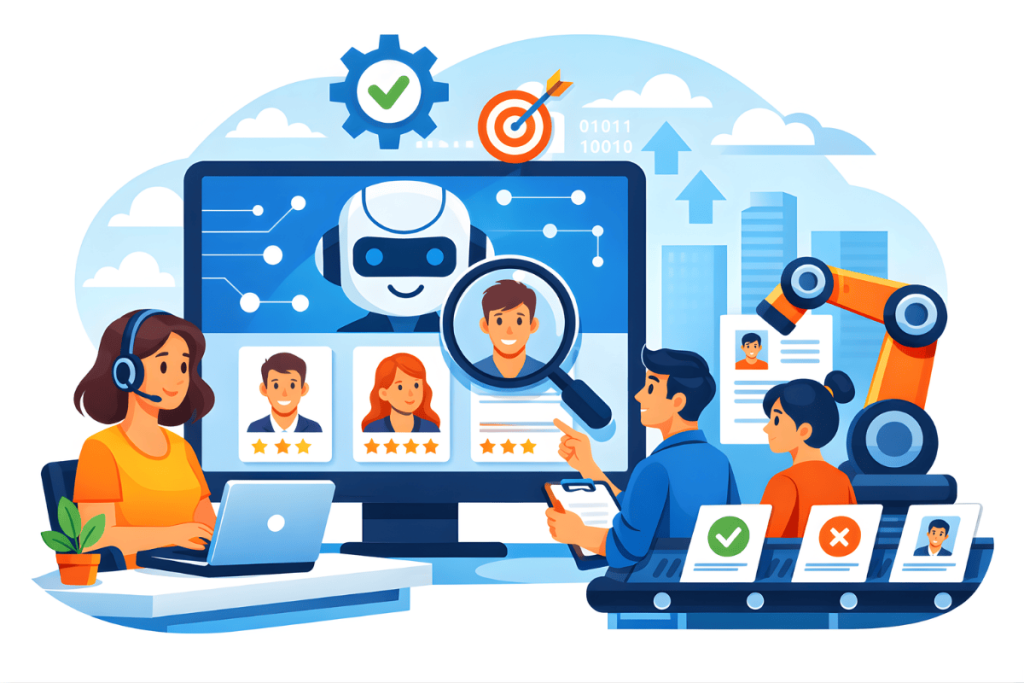
Automated job matching systems are technology-driven platforms that analyze job requirements and candidate profiles to recommend the most relevant matches.

Instead of relying on manual filtering, these systems use structured data, behavioral signals, and predictive models to connect people with opportunities that fit their skills, experience, and goals.

At a basic level, they answer one powerful question:

Who is most likely to succeed in this role, and who is most likely to value this opportunity?

Key elements these systems evaluate include:

  • Skills and technical competencies
  • Experience level and career history
  • Industry relevance
  • Location or remote preferences
  • Availability and engagement signals
  • Employer requirements and expectations

Modern systems go far beyond keyword matching. They focus on intent, context, and probability of success.

Why Traditional Job Search Models Fall Short

For decades, job boards followed a simple logic. Post a job. Receive hundreds of applications. Manually review them.

This approach created serious problems:

  • Recruiters faced application overload
  • Qualified candidates were buried under volume
  • Bias entered the early filtering stages
  • Time-to-hire increased dramatically
  • Candidates lost trust in the process

Studies in HR analytics consistently show that manual screening is error-prone and inconsistent. Humans struggle to process large volumes of similar data accurately.

Automated job matching systems were developed to solve these limitations using data-backed logic.

The Science Behind Automated Job Matching

Automated job matching systems are built on well-established scientific principles.

Machine Learning and Pattern Recognition

Machine learning models are trained on historical hiring data to identify patterns between successful hires and job attributes.

Consensus in applied AI research confirms that supervised learning models can outperform manual screening when trained on clean, representative datasets.

Natural Language Processing

NLP allows systems to understand resumes and job descriptions beyond exact wording.

For example:

  • Understanding that Python and data analysis are related skills
  • Recognizing role equivalence across industries
  • Interpreting seniority and responsibility levels

This is grounded in computational linguistics research that shows language models can capture semantic meaning, not just keywords.

Decision Science and Probability Modeling

Many systems use probabilistic scoring rather than yes-or-no filters.

This reflects best practices in decision science, where ranking by likelihood produces better outcomes than rigid exclusion rules.

How Automated Job Matching Systems Work Step by Step

1. Data Collection

The system gathers structured and unstructured data from:

  • Candidate profiles and resumes
  • Job descriptions
  • Skill taxonomies
  • Behavioral signals such as clicks or applications

2. Profile Normalization

Data is standardized, so comparisons are accurate.

For example:

  • Job titles are mapped to common role definitions
  • Skills are grouped into categories
  • Experience is converted into measurable ranges

3. Matching and Scoring

Algorithms evaluate compatibility using weighted factors such as:

  • Skill overlap
  • Experience relevance
  • Role complexity
  • Availability and preferences

Each candidate-job pair receives a relevance score.

4. Ranking and Recommendations

The system presents ranked matches rather than overwhelming lists.

This increases clarity and confidence for both employers and candidates.

Why Automated Matching Builds Trust in Hiring

Trust is the most valuable currency in hiring.

Automated job matching systems increase trust by:

  • Reducing bias from early-stage screening
  • Applying consistent evaluation criteria
  • Improving transparency in why matches appear
  • Saving time for meaningful conversations

Research from organizational psychology supports that perceived fairness increases candidate satisfaction and employer reputation.

When users understand that matches are data-driven and objective, confidence grows.

Automated Matching and the Rise of Remote Work

Remote work expanded the global talent pool. It also increased complexity.

Automated job matching systems became essential for managing:

  • Cross-border hiring
  • Time zone compatibility
  • Remote collaboration skills
  • Digital communication proficiency

Candidates who develop the Essential Skills for Remote Tech Work are significantly more likely to be matched accurately in automated systems because their profiles align with modern role requirements.

These systems reward clarity, relevance, and proof of capability.

Benefits for Job Seekers

Automated job matching systems empower candidates in meaningful ways.

Key advantages include

  • Less time spent searching
  • Higher-quality job recommendations
  • Better alignment with career goals
  • Reduced rejection fatigue
  • Clearer understanding of market demand

Instead of applying everywhere, candidates focus on where they matter most.

This creates momentum and optimism.

Benefits for Employers and Recruiters

Employers gain operational and strategic value.

Key outcomes include

  • Faster hiring cycles
  • Higher-quality shortlists
  • Lower cost per hire
  • Improved retention rates
  • Stronger employer branding

According to industry benchmarks, organizations using intelligent matching report higher first-year performance among hires.

Automated Matching vs Job Boards

Traditional job boards prioritize volume. Automated systems prioritize fit.

Here is a simple comparison:

  • Job boards list opportunities
  • Matching systems recommend opportunities
  • Job boards react to applications
  • Matching systems act proactively
  • Job boards reward activity
  • Matching systems reward relevance

This difference explains why professionals increasingly rely on platforms highlighted in 10 Trusted Sites to find Remote Jobs that use smarter matching logic rather than basic listings.

Ethics, Fairness, and Responsible AI

Responsible job matching systems follow ethical guidelines supported by global AI governance frameworks.

Best practices include:

  • Regular bias audits
  • Transparent scoring logic
  • Human oversight in final decisions
  • Secure data handling and privacy protection

Consensus among AI ethics researchers is clear. Automation must support human judgment, not replace it entirely.

Trust grows when technology is accountable.

What Makes a Job Matching System Reliable

Not all systems are equal.

Reliable platforms demonstrate:

  • Clear explanation of how matching works
  • Verified job data and employer information
  • Secure onboarding and profile management
  • Real contact details where appropriate
  • Support for both candidates and employers

Platforms that combine intelligent matching with real-world verification are more credible.

The Future of Automated Job Matching

The future is already forming.

We are seeing:

  • Skill-based hiring replacing title-based hiring
  • Predictive career path recommendations
  • Integration with learning platforms
  • AI agents that negotiate availability and fit
  • Real-time labor market insights

These advancements are backed by ongoing research in workforce analytics and agent-based AI systems.

Opportunity discovery will continue to become faster, clearer, and more empowering.

Getting Started With Intelligent Job Matching

For professionals and businesses ready to move beyond outdated hiring models, the first step is choosing a platform built on trust and verified data.

You can sign up on Ojiiz to experience automated job matching that prioritizes real opportunities, direct access, and intelligent alignment between skills and demand.

This approach removes friction and restores confidence in how work is discovered and delivered.

Frequently Asked Questions (FAQs)

What data do automated job matching systems use?

They use skills, experience, job requirements, and behavioral signals to evaluate compatibility.

Are automated job matching systems accurate?

When built on quality data and ethical AI principles, they consistently outperform manual screening.

Do these systems replace recruiters?

No. They support recruiters by improving shortlisting and decision quality.

Can job seekers improve their match results?

Yes. Clear skill descriptions, updated experience, and focused goals significantly improve matching accuracy.

Are automated matching systems safe to use?

Trusted platforms utilize secure technologies, data encryption, and privacy safeguards that align with industry standards.

Conclusion

Automated job matching systems are not about speed alone. They are about confidence, clarity, and connection.

They reflect a deeper understanding of how people work, grow, and succeed. Backed by science, refined by data, and guided by responsible design, these systems are shaping a fairer and more effective job market.

For those ready to embrace smarter hiring and career discovery, the future is already here.

What Is B2B Lead Generation

What Is B2B Lead Generation? Process, Strateg...

B2B lead generation is the structured process of identifying, attracting, and qualifying businesses that have a genuine likelihood of purchasing a product or service. Unlike B2C marketing, which often targets individuals driven by impulse or emotion, B2B lead generation focuses on logic, value, return on investment, and long-term outcomes.

At its core, B2B lead generation connects a company’s expertise with organizations actively seeking solutions. Industry consensus in marketing science and sales research consistently shows that organizations with a defined lead generation system achieve higher pipeline predictability, shorter sales cycles, and stronger customer lifetime value.

Why B2B Lead Generation Matters More Than Ever

Modern B2B buyers are informed, analytical, and cautious. Research widely cited across marketing literature shows that most buyers complete a significant portion of their evaluation before speaking to sales.

This shift has made lead generation a strategic growth function rather than a marketing afterthought.

Key reasons it matters:

  • It builds qualified demand, not just traffic
  • It aligns marketing and sales around shared revenue goals
  • It reduces acquisition costs over time
  • It creates visibility into future revenue

Organizations that invest early in lead generation infrastructure consistently outperform competitors that rely on referrals alone.

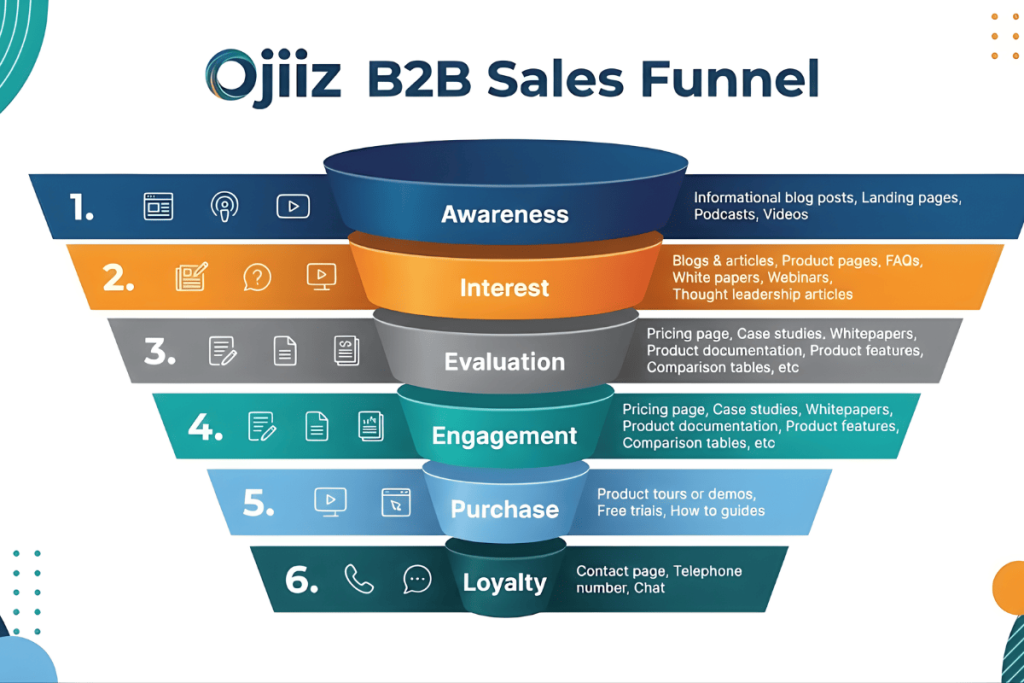
How B2B Lead Generation Works: The Core Process

B2B lead generation follows a repeatable framework grounded in buyer behavior research.

1. Identifying the Ideal Customer Profile (ICP)

An ICP defines the type of business most likely to benefit from your solution. This includes:

  • Industry
  • Company size
  • Revenue range
  • Decision-maker roles
  • Pain points

This step ensures effort is focused on high-value opportunities.

2. Attracting Relevant Prospects

Attraction happens through educational and value-driven channels, such as:

  • Search-optimized content
  • Professional networks like LinkedIn
  • Industry webinars
  • Email campaigns
  • Paid media with intent targeting

The goal is not volume, but relevance.

3. Capturing Lead Information

Once interest is established, prospects exchange their contact details for value:

  • Whitepapers
  • Demos
  • Case studies
  • Consultations

This value-exchange model is a well-established principle in digital marketing psychology.

4. Qualifying Leads

Qualification separates curiosity from intent. Common criteria include:

  • Budget authority
  • Decision timeline
  • Business need
  • Fit with the solution scope

Sales and marketing alignment at this stage is critical.

Types of B2B Leads You Should Understand

Not all leads are equal. Effective teams categorize leads to improve conversion efficiency.

  • Marketing Qualified Leads (MQLs): Engaged prospects showing early interest
  • Sales Qualified Leads (SQLs): Prospects vetted and ready for sales engagement
  • Product Qualified Leads (PQLs): Users who experience product value firsthand
  • Cold Leads: Contacts that require nurturing and education

Clear definitions reduce friction between teams and improve forecasting accuracy.

Proven B2B Lead Generation Strategies That Work

Content-Driven Lead Generation

Educational content remains one of the most trusted acquisition methods. Search engines reward depth, accuracy, and relevance, while buyers reward clarity.

Strategic content includes:

  • Industry guides
  • Research-backed blogs
  • Decision frameworks
  • Comparison resources

AI-assisted tools are now widely used to scale this effort responsibly. A practical overview of this approach is explained in AI Platforms Usage for Effective Lead Generation, which highlights how automation supports, not replaces, human judgment.

Lead Generation Platforms

Technology plays a central role in organizing, scoring, and nurturing leads at scale. A clear explanation of this ecosystem is covered in What is a Lead Generation Platform, detailing how data, workflows, and analytics connect marketing to revenue outcomes.

Consensus among revenue operations experts shows that centralized platforms reduce leakage and improve response time.

Choosing the Right Tools

Not every platform fits every business. Factors such as team size, sales cycle length, and deal value matter. A comparative outlook on emerging solutions is discussed in Best Platforms for Lead Generation, helping decision-makers evaluate tools based on real-world use cases.

Account-Based Marketing (ABM)

ABM focuses on high-value accounts rather than broad audiences. It combines personalization, data intelligence, and coordinated outreach.

Benefits include:

  • Higher deal sizes
  • Stronger relationships
  • Shorter sales cycles for enterprise deals

Email and Relationship-Led Outreach

Email remains effective when it is:

  • Relevant
  • Respectful
  • Timely

Trust is built through consistency and insight, not frequency.

The Role of Data, AI, and Analytics in B2B Lead Generation

Industry research consistently supports the use of data-driven decision-making. Analytics helps teams:

  • Identify high-intent behavior
  • Optimize conversion paths
  • Forecast revenue accurately

AI enhances pattern recognition and prioritization, while human teams retain control over strategy and messaging. This hybrid model reflects current best practices across leading B2B organizations.

Common B2B Lead Generation Mistakes to Avoid

Even strong teams can underperform if fundamentals are ignored.

Avoid:

  • Chasing volume over quality
  • Ignoring sales feedback
  • Over-automating early relationships
  • Measuring activity instead of outcomes

Trust grows when prospects feel understood, not processed.

How to Measure B2B Lead Generation Success

Effective measurement focuses on business impact, not surface metrics.

Key indicators include:

  • Lead-to-opportunity conversion rate
  • Cost per qualified lead
  • Sales cycle length
  • Customer acquisition cost
  • Lifetime value

These metrics are widely recognized across revenue operations frameworks.

Frequently Asked Questions (FAQs)

What is the main goal of B2B lead generation?

The primary goal is to build a predictable pipeline of qualified business prospects who are likely to convert into long-term customers.

How is B2B lead generation different from B2C?

B2B focuses on longer decision cycles, multiple stakeholders, and value justification, while B2C often centers on individual purchasing behavior.

How long does B2B lead generation take to show results?

Timelines vary, but most organizations see meaningful momentum within three to six months of consistent execution.

Is content marketing essential for B2B lead generation?

Yes. Educational content builds credibility, supports buyer research, and attracts high-intent prospects organically.

Can small businesses succeed with B2B lead generation?

Absolutely. Clear positioning, focused targeting, and disciplined execution allow small teams to compete effectively.

Conclusion

B2B lead generation is not about persuasion alone. It is about clarity, credibility, and consistency. Organizations that prioritize education, data integrity, and buyer intent create pipelines that last beyond short-term campaigns.

When done correctly, lead generation becomes a growth engine rooted in trust, one that compounds value over time and strengthens every customer relationship that follows.

Tech Jobs

10 Future-Proof Remote Tech Jobs with Excepti...

The dream of a high-impact, location-independent career in technology is not just a fantasy;  it’s today’s reality. Companies worldwide are aggressively competing for elite tech professionals, offering exceptional compensation for the skills that power our digital world. This shift represents more than a trend; it’s a fundamental restructuring of the workforce that rewards expertise, autonomy, and results. For the skilled technologist, this is a moment of unprecedented opportunity. By aligning your capabilities with the most in-demand roles, you can unlock a career defined by freedom, financial reward, and profound professional satisfaction. The journey begins with understanding where the greatest opportunities lie.

The Remote Revolution: Why Tech Leads the Way

The technology sector has fundamentally embraced remote work, transitioning from a temporary solution to a core strategic advantage. This paradigm shift is driven by a global hunt for specialized talent and overwhelming data showing that remote tech teams often achieve higher productivity and innovation. Companies are no longer limited by geography; they can hire the best machine learning engineer from Toronto, a brilliant DevOps specialist from Lisbon, and a top-tier cybersecurity expert from Singapore. This global talent pool means that compensation is becoming standardized at the highest level. For you, this translates into the power to choose work that aligns with your passions, from anywhere with a reliable internet connection, while being paid a premium for your expertise. Success in this environment requires a specific set of skills; developing these Essential Skills for Remote Tech Work is the critical first step toward securing these coveted roles.

The Top 10 Highest-Paying Remote Tech Roles

Job CategoryKey OpportunitiesWhy It’s High-Paying & Remote-Friendly
AI/ML EngineeringDesign, build, & deploy intelligent systems.Extreme specialization & business-critical impact drive top-tier salaries. Work is inherently digital & collaborative via cloud platforms.
DevOps & Site Reliability Engineering (SRE)Bridge development & operations; ensure system resilience.Directly responsible for the uptime & revenue of digital products. Monitoring & automation tools are built for remote management.
Cloud Architecture & EngineeringDesign, implement, & manage cloud infrastructure.Central to modern business infrastructure. Cloud consoles & infrastructure-as-code enable complete remote control.
Cybersecurity (SecOps & Threat Analysis)Protect systems, data, & networks from digital attacks.High-stakes role protecting critical assets. Threat monitoring & incident response are 24/7 global activities.
Data Science & EngineeringExtract insights & build pipelines from vast datasets.Decisions driven by data command high value. Work with cloud-based data platforms and distributed teams.
Blockchain DevelopmentDevelop decentralized applications & smart contracts.Niche expertise in a rapidly growing, high-value field. Projects are global and digital by nature.
Full-Stack & Web DevelopmentBuild and maintain user-facing applications & services.Continual demand for digital experiences. Modern dev tools & Agile workflows are designed for distributed teams.
Technical Product ManagementGuide the strategy & execution of tech products.Combines deep technical knowledge with business strategy. Aligns distributed engineering, design, and marketing teams.
Sales Engineering (Tech)Provide technical expertise throughout the sales process.Directly enables high-value revenue generation. Demos, architectures, and consulting are effectively delivered remotely.
AR/VR DevelopmentCreate immersive virtual & augmented reality experiences.Pioneering field with high demand for specialized skills. Development and collaboration happen in digital creation environments.

Here are the roles where expertise meets exceptional reward in the remote landscape.

1. AI/ML Engineer

  • Salary Range: $180,000 – $300,000+
  • Primary Skills: Machine Learning (TensorFlow, PyTorch), Deep Learning, Natural Language Processing (NLP), Python, MLOps, Cloud AI services (AWS SageMaker, GCP Vertex AI).
  • The Remote Advantage: The work of building, training, and deploying models is almost exclusively performed on cloud-based infrastructure. Collaboration happens through code repositories, experiment tracking tools, and video calls, making physical presence unnecessary. The intense global competition for this scarce talent pushes salaries to the top of the scale.
  • Find Opportunities: Explore current openings in our AI/ML Job Category.

2. DevOps & Site Reliability Engineer (SRE)

  • Salary Range: $160,000 – $250,000+
  • Primary Skills: Kubernetes, Docker, CI/CD (Jenkins, GitLab), Infrastructure as Code (Terraform, Ansible), cloud platforms (AWS, Azure, GCP), scripting (Python, Go).
  • The Remote Advantage: SREs are the guardians of digital uptime. Their tools, monitoring dashboards, alerting systems, and cloud consoles are accessible from anywhere. The role often requires being on-call, which is naturally suited to a remote environment. Their direct impact on product stability and user experience makes them invaluable.
  • Find Opportunities: Browse active roles in our DevOps/Database category.

3. Cloud Architect

  • Salary Range: $170,000 – $240,000+
  • Primary Skills: Expert-level certification in AWS, Azure, or GCP; network architecture; security; cost optimization; solution design.
  • The Remote Advantage: Architects design systems that are inherently remote-first, global, scalable, and secure cloud infrastructures. They consult with teams and stakeholders virtually to design solutions that can be implemented and managed from anywhere in the world.

4. Cybersecurity Specialist (SecOps/Threat Intelligence)

  • Salary Range: $150,000 – $220,000+
  • Primary Skills: Security Information and Event Management (SIEM), incident response, threat hunting, penetration testing, compliance frameworks (SOC2, ISO 27001).
  • The Remote Advantage: Cyber threats don’t sleep, and neither do security operations centers (SOCs). Analysts monitor threats, investigate incidents, and coordinate responses from secure remote workstations. The global nature of cyber defense makes remote work a strategic asset, allowing for 24/7 coverage across time zones.

5. Data Scientist & Engineer

  • Salary Range: $145,000 – $210,000+
  • Primary Skills (Scientist): Statistical analysis, Python/R, machine learning, data visualization.
  • Primary Skills (Engineer): SQL/NoSQL, ETL/ELT pipelines (Apache Spark, Airflow), data warehousing (Snowflake, BigQuery).
  • The Remote Advantage: Data work revolves around accessing centralized data lakes and warehouses, building pipelines, and analyzing findings, all activities performed on remote servers. Collaboration is centered on sharing code, notebooks, and dashboards, perfect for a distributed team model.

6. Blockchain Developer

  • Salary Range: $140,000 – $220,000+
  • Primary Skills: Solidity, Rust, smart contract development, Web3.js, Ethers.js, understanding of consensus mechanisms.
  • The Remote Advantage: The blockchain ecosystem is decentralized and global by design. Development, collaboration, and community engagement happen entirely online, making this one of the most naturally remote-friendly fields in tech.

7. Full-Stack Developer

  • Salary Range: $120,000 – $190,000+
  • Primary Skills: JavaScript/TypeScript, React/Vue/Angular, Node.js/Python/Java, databases, REST/GraphQL APIs, cloud deployment.
  • The Remote Advantage: The entire toolkit for modern web development, IDEs, version control, cloud hosting, and communication platforms, is built for distributed work. Agile methodologies adapt seamlessly to remote settings, focusing on deliverables over physical presence.
  • Find Opportunities: See thousands of projects in our Web Development category.

8. Technical Product Manager

  • Salary Range: $130,000 – $200,000+
  • Primary Skills: Roadmapping, Agile/Scrum, data analysis, UX principles, stakeholder management, and technical fluency.
  • The Remote Advantage: Product management is about synthesizing information, setting vision, and coordinating teams, all tasks that can be effectively done through virtual meetings, collaborative documents, and project management software. They are crucial for aligning distributed engineering teams.

9. Sales Engineer

  • Salary Range: $125,000 – $195,000+ (often with significant commission)
  • Primary Skills: Technical presentation, proof-of-concept building, solution architecture, relationship building, and deep product knowledge.
  • The Remote Advantage: Sales cycles for complex tech products have always involved remote demos and consultations. Sales Engineers excel at using video conferencing, screen sharing, and cloud demo environments to build trust and close deals globally without travel.

10. AR/VR Developer

  • Salary Range: $110,000 – $180,000+
  • Primary Skills: Unity (C#) or Unreal Engine (C++), 3D modeling, spatial computing, interaction design.
  • The Remote Advantage: While collaborative design sessions can be beneficial, the core development work in game engines and 3D software is done individually on powerful workstations. The rise of collaborative VR spaces themselves is also creating new paradigms for remote teamwork in this field.

Securing Your High-Value Remote Position

Landing one of these elite roles requires more than technical prowess. It demands a proactive and strategic approach to your career.

  • Build an Irresistible Digital Presence: Your online profile is your new handshake. Cultivate a strong LinkedIn profile, a clean GitHub repository with contributions and projects, and perhaps a professional blog or portfolio site that showcases your thought leadership.
  • Master the Art of Asynchronous Communication: Excellence in written communication is non-negotiable. You must be able to articulate complex ideas, document decisions, and provide clear status updates in writing. This skill builds trust with managers and colleagues you may never meet in person.
  • Target the Right Companies: Focus on companies with a mature, distributed culture, often tech-native startups, SaaS companies, and forward-thinking enterprises. They have the processes and trust in place to support and reward high-performing remote professionals.
  • Choose Your Path: Understand the fundamental trade-offs between stability and autonomy. Are you seeking the security and benefits of a full-time remote role, or the variety and potential of freelance consulting? This is a crucial decision that shapes your search strategy. For a deep dive into this choice, explore our analysis of Remote Work vs Freelancing.

Frequently Asked Questions (FAQs)

What is the most important skill for landing a high-paying remote tech job?

Beyond core technical expertise, proven asynchronous communication is paramount. The ability to write clear documentation, articulate complex ideas in writing, and manage projects transparently builds the essential trust required for remote teams.

Can I get a high-paying remote job as an entry-level developer?

While more challenging, it is possible. Entry-level professionals succeed by showcasing strong foundational skills, a portfolio of personal or open-source projects, and exceptional learning agility. Being proactive in communication and seeking out companies with established remote mentorship programs is key.

How do I negotiate a salary for a remote position?

Research global salary ranges for the role, not just local ones. Emphasize the value you bring and your proficiency with remote collaboration tools and processes. Consider the total compensation package, which may include benefits, home office stipends, and flexible time-off policies.

Do I need to be available across multiple time zones?

This depends on the company. Some require overlap with a “core hours” window (e.g., 4 hours with the company’s headquarters), while truly global asynchronous companies may have minimal real-time meeting requirements. This is a critical factor to clarify during the interview process.

What is the biggest challenge of high-paying remote work, and how do I overcome it?

Maintaining boundaries and preventing burnout is a common challenge. Successful remote professionals establish strict routines, designate a physical workspace, communicate their availability clearly, and prioritize disconnecting from work to recharge.

Conclusion

The landscape of high-paying remote tech work is rich with potential. From architecting the future of AI to securing critical digital assets, the roles that command top dollar are those that solve complex, valuable problems. These positions reward not just technical mastery but also the discipline, communication, and proactive mindset required to excel outside a traditional office.

The door to a career defined by freedom and impact is open. The question is no longer if you can build this life, but which exciting path you will choose to build it.