






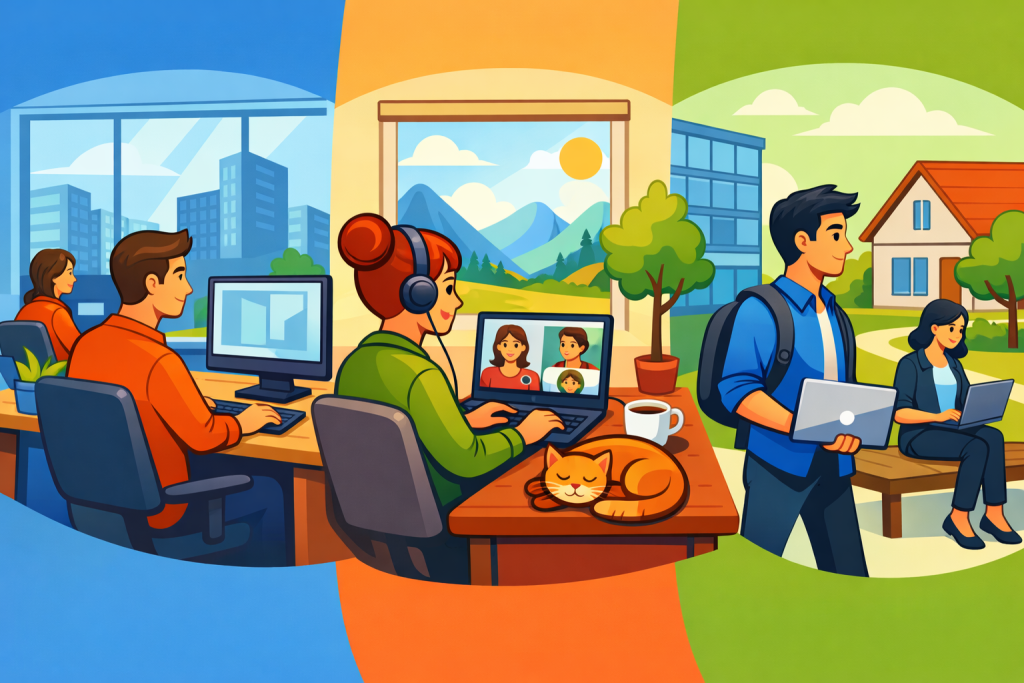

In today’s dynamic business environment, choosing the right workforce model is critical for success. Companies are increasingly evaluating onsite, remote, and hybrid work structures to balance productivity, employee satisfaction, and business growth. Each model comes with its unique advantages, challenges, and applications. Understanding these differences can help organizations make informed decisions that align with both business goals and employee expectations.
Understanding Workforce Models
Before diving into the benefits of each model, it is important to define what they are:
Onsite Work
On-site work involves employees performing their roles at a central office or designated location. This traditional model promotes direct supervision, team cohesion, and in-person collaboration.
Remote Work
Remote work allows employees to operate from anywhere, often from home or co-working spaces. With advancements in technology, remote work has become highly feasible and productive. For insights on current trends, refer to Remote Hiring Trends 2026 to understand how global companies are redefining work in the modern era.
Hybrid Work
Hybrid models combine onsite and remote work, giving employees flexibility while maintaining occasional in-person collaboration. This model aims to capture the advantages of both worlds.
Benefits and Challenges of Onsite Work
Advantages
- Direct Collaboration: Face-to-face interaction fosters stronger relationships and quicker decision-making.
- Structured Environment: Clear work hours and office routines can improve focus for some employees.
- Immediate Access to Resources: On-site employees can use equipment, tools, and support without delays.
Challenges
- Commuting Stress: Time and energy spent traveling to the office can impact work-life balance.
- Limited Flexibility: Employees may find it harder to manage personal commitments.
- Higher Overhead Costs: Maintaining office space, utilities, and amenities increases expenses.
Despite these challenges, onsite work remains ideal for industries requiring hands-on presence, such as manufacturing, healthcare, and customer-facing roles.
Benefits and Challenges of Remote Work
Advantages
- Flexibility and Autonomy: Employees control their work environment and schedules, often increasing productivity and satisfaction.
- Global Talent Access: Companies can hire skilled professionals from anywhere, unlocking diverse perspectives and expertise.
- Cost Efficiency: Reduced office space and related costs benefit both employers and employees.
Challenges
- Communication Barriers: Remote teams require strong digital communication strategies to stay aligned.
- Work-Life Boundaries: Remote employees may struggle to separate work from personal life.
- Technology Dependence: Reliable internet and tools are crucial for uninterrupted productivity.
To succeed in a remote environment, employees must develop essential skills. For a deeper look at what skills are becoming increasingly important, explore Top In-Demand Remote Skills.
Benefits and Challenges of Hybrid Work
Advantages
- Balanced Flexibility: Employees enjoy both in-office collaboration and remote convenience.
- Enhanced Productivity: Teams can optimize schedules, reducing burnout while maintaining connection.
- Talent Attraction: Hybrid work appeals to professionals seeking modern, flexible workplaces.
Challenges
- Complex Scheduling: Coordinating onsite and remote days can be tricky for managers.
- Technology Integration: Companies must ensure seamless access to tools across locations.
- Cultural Consistency: Maintaining company culture requires thoughtful engagement strategies.
Hybrid models are particularly effective for knowledge-based industries, IT, and creative fields where collaboration and independent work are equally important.
Key Considerations When Choosing a Workforce Model
Selecting the right model involves more than preference, it requires strategic evaluation.
- Nature of Work
- Hands-on roles may benefit from onsite presence.
- Knowledge work or tech roles can often thrive remotely.
- Employee Preferences and Well-being
- Consider surveys to understand what employees value most: flexibility, structure, or hybrid arrangements.
- Technology and Infrastructure
- Ensure digital tools, communication platforms, and cybersecurity measures support the chosen model.
- Business Goals
- Align the model with productivity, growth objectives, and customer requirements.
- Scalability
- Remote or hybrid models allow easier expansion without physical space constraints.
Organizations can also explore project-based approaches, which combine flexible models with targeted goals. For more opportunities in this space, check Project-Based Remote Roles for Developers.
Implementing the Chosen Workforce Model
Once a model is selected, a clear implementation strategy ensures success:
- Communication Protocols: Establish clear communication guidelines and meeting schedules.
- Performance Metrics: Define measurable goals to track productivity and outcomes.
- Technology Setup: Equip employees with the necessary hardware, software, and secure access tools.
- Training and Support: Offer guidance for adapting to new workflows or collaboration tools.
- Feedback Loop: Regularly gather employee feedback to refine processes and improve satisfaction.
For companies ready to explore remote work opportunities or build teams under modern models, Signup On Ojiiz to access verified opportunities and resources.
The Future of Workforce Models
Research shows the workplace is increasingly flexible. Organizations that adapt benefit from higher employee engagement, better talent retention, and stronger performance. Hybrid and remote models are likely to dominate industries where digital tools, collaboration, and knowledge work are essential.
Studies by Gallup and Harvard Business Review indicate:
- Employees with flexible work options report higher job satisfaction and productivity.
- Remote-friendly organizations can access a wider talent pool, enhancing diversity and innovation.
- Hybrid arrangements often result in lower attrition rates and reduced operational costs.
Investing in the right model is not just about immediate gains; it sets the foundation for long-term competitiveness and growth.
Frequently Asked Questions (FAQs)
1. What is the difference between remote and hybrid work?
Remote work is fully location-independent, whereas hybrid work combines office presence with remote days.
2. Which model increases employee productivity the most?
Productivity depends on the role and work culture. Remote and hybrid setups often boost efficiency for knowledge-based tasks.
3. How can companies maintain culture with remote teams?
Regular virtual meetings, recognition programs, and digital team-building activities help sustain company culture.
4. Are on-site jobs becoming less common?
On-site roles are still essential in sectors requiring physical presence, but are declining in knowledge-intensive industries.
5. How do I know which workforce model suits my organization?
Evaluate work nature, employee needs, business goals, and technology readiness to choose the optimal model.
6. Can hybrid models reduce employee burnout?
Yes, by offering flexibility and reducing commuting stress while maintaining collaboration opportunities.
7. How do project-based remote roles work?
Employees work on specific projects with defined goals and timelines, offering flexibility and performance-driven results.
Conclusion
Choosing the right workforce model is a strategic decision that impacts productivity, employee satisfaction, and business growth. On-site work fosters collaboration, remote work provides flexibility and access to global talent, and hybrid models combine the best of both worlds. By assessing work requirements, employee preferences, and technology readiness, organizations can implement a model that supports success now and in the future. Staying informed about evolving work trends and continuously developing employee skills can help companies remain competitive and adaptable in an ever-changing business landscape.